Category: Personal

  • The Body as First Register

    The Body as First Register

    My body has been the first place where things gather. A pressure sits in my back—a low bracing that has begun to feel structural, the kind of tightness that doesn’t shift with stretching or rest. It moves without ever fully leaving. Some days it settles between my shoulder blades; other days it spreads into my neck or rests heavily in my hips. The sensation is diffuse, hard to locate, yet immediately recognizable once it arrives. Everything feels slightly drawn inward, as if the body has deliberately narrowed its range.

    The ache doesn’t spike. It remains steady, more background than signal. Muscles stay engaged even at rest, as if something still needs holding and hasn’t yet been set down. There’s a readiness in it, though nothing immediate is forming. I notice it most when I slow down. Sitting brings it into focus. Pausing sharpens it. When movement stops, the pressure moves forward and the body organizes itself around it. The sensation doesn’t ask for attention; it simply refuses to disappear.

    Living this way has altered how I understand what’s been happening. The body feels occupied, involved in something ongoing—not injured, not malfunctioning, but engaged in sustained effort without a visible task. This is the place I’m writing from: a body compressed and alert at once, held together without a complete story yet for what that holding is preparing for.

    A Quiet Overwhelm

    Over time, it became clear this wasn’t random. The body was registering something before I had language for it. The tension built gradually, without a single moment to point to, accumulating over weeks and months and settling quietly rather than arriving all at once. What surprised me was the form this overwhelm took. There was little panic—no rush, no spike, no outward agitation. Instead, things slowed. Initiation became difficult. Small tasks grew dense. The body responded by becoming still, narrowing its range, holding position.

    I would sit in front of my laptop with the lid open, the screen dimming itself while I stayed there, hands resting on the keyboard without moving.

    This kind of stillness is easy to misread. From the outside, it can look like avoidance or delay. From the inside, it feels like containment. Energy pulls inward. Movement pauses. Output reduces. The system stays intact by limiting how much it releases at once. I began to recognize the pattern as it repeated. Each time something shifted—each time another layer of uncertainty entered—the body tightened slightly, not as protest but as stabilization, a way of staying upright, of keeping things from spilling.

    There’s information in that response. An early warning that doesn’t speak in sentences. The body adjusts first, marking change through sensation and letting the holding register before the story catches up. Over time, this read less like pathology and more like pattern recognition: the body noticing accumulation and responding in the only way it knows how—by slowing down and staying in place until the next shape becomes clearer.

    Loosening Frames

    At the same time, several forms of scaffolding have been loosening—not abruptly, but through gradual unfastening, felt before it was fully understood. The PhD is coming to an end, along with a structure that has carried weight for a long time. Its timelines and rhythms organized my days and sense of direction. As that frame thins, the body seems to notice first. The absence registers as space, and space carries its own pressure.

    The lease is ending too. The rooms I move through each day no longer feel fixed. Space has become provisional. The body responds by staying alert, keeping itself gathered. Even familiar corners take on a different texture when they’re no longer guaranteed. Beyond that, the next steps remain unformed. There isn’t a clear container waiting to take shape. This doesn’t arrive as a dramatic void. It appears as a background hum that keeps the body from fully settling.

    All of this unfolds within a broader atmosphere that never quite recedes: political instability, escalating violence, systems coming undone. These conditions don’t remain outside personal life. They enter the body like weather, a constant barometric shift that makes everything heavier and harder to place. None of these shifts stands alone. They layer, overlap, and accumulate. The body holds the sum of them, adjusting quietly as the ground shifts underneath.

    Where Things Stall

    As these layers built, freeze began to appear in ordinary places, in small procedural moments. Initiating simple tasks took longer. Messages lingered unopened or half-drafted. Anything requiring sequencing or follow-through felt dense. Often the body reacted before thought finished forming. A screen would open and something in my back would tighten. An inbox would load and the body would brace. Lists and calendars brought on a full-body pause—immediate and physical—as if the system had already shifted gears.

    Mail collected on the edge of the table, unopened, the same envelopes moved from one corner to another over several days.

    Stillness became common. Movement narrowed. Energy pulled inward. Attention shortened. The effort to move from one small step to the next increased. The body organized itself around slowing down, especially where accumulation was highest—administrative tasks, ongoing correspondence, anything requiring continuity across time. Engagement reduced. Output thinned.

    Seen closely, this freeze carried information. It mapped density. It marked where too many threads were being held at once. The system paused to stay intact until pressure eased enough to allow movement again. Over time, the stillness took on shape. It wasn’t empty. It occupied space. Muscles gathered around it. The pause held.

    What Can Be Held

    When several structures loosened at once, the body narrowed its field. When demands accumulated without clear edges, movement reduced. Fewer motions. Fewer decisions. The body stayed closer to itself. Engagement continued in some places and not others. Tasks requiring sustained attention stretched the system thin. The body responded by slowing initiation and working in short intervals.

    The pause had boundaries. It wasn’t total or random. It clustered around sequences that extended forward without a clear end. The body adjusted its pace to what it could hold without spilling.

    The narrowing had a threshold
    Enough.

    The Form No Longer Fits

    The decision to end my private practice arrived through the body. It showed up as contraction, as effort that no longer redistributed. The work remained meaningful. The form no longer fit. Capacity and structure stopped aligning in a way the body could negotiate. I noticed it in the preparation it took, the recovery afterward, the back tightening before language did. The work demanded continuity across time.

    And something in me would not go there again—not cleanly, not fully, not without paying a cost I could already feel.

    The body responded by pulling inward, signaling a limit that didn’t soften with reassurance.

    The decision wasn’t dramatic. It settled slowly through repetition. Each return to the question carried the same physical answer. There is grief here, low and steady—a grief for a form that once held something real, for relationships shaped through care, for a version of myself that lived inside that structure.

    Responsibility remains. It appears in careful timing, in communication, in how endings are handled. The body still holds that weight even as the boundary is set. Ending the practice feels less like rupture than closure—a form laid down because it no longer matches what the body can sustain. Care remains. The limit remains. Both are held.

    Work Beneath Stillness

    What began to make sense was the compression itself—the narrowing, the inward pull, the body staying gathered. There’s logic in that compression. When a form is no longer viable, work turns inward. Systems reorganize without consulting the calendar. Energy reroutes. What once moved outward turns back toward center.

    This phase doesn’t look spacious or restorative. It’s dense, pressurized, full of friction. Beneath the surface, the body works continuously—redistributing weight, testing configurations not yet named. From the outside, little changes. Movement slows. Output thins. Inside, everything remains active.

    There’s no timeline attached to this work. The body stays in it as long as needed, reorganizing around what can be sustained next. This isn’t rest. It’s internal labor.

    Care Finds Its Scale

    As this reorganization continues, my relationship to care and obligation shifts. The body responds differently to what asks for attention. Some requests land cleanly. Others stall before reaching language. Care feels more precise now. It gathers around what can be met without strain. Long arcs of responsibility register as heavier as they extend forward.

    Obligation has slowed. Urgency has thickened rather than intensified. Timing and pacing matter more. Commitment hasn’t disappeared; it has cooled. Energy collects before release. Attention stays closer to center, conserving what hasn’t finished forming.

    This doesn’t feel like withdrawal. It feels like recalibration. Care finding a shape that matches capacity. Responsibility adjusting its scale. The body setting a tempo it can maintain. What I’m allowing arrives quietly: accompaniment without translation, delay without panic, unfinishedness without collapse. Messages wait. Tasks unfold over days. Threads remain open.

    I’m allowing the body to set the pace, letting sensation determine when to move and when to stay still. I watch where effort gathers and where it drains. These allowances aren’t generous; they’re necessary. They create just enough room for the system to keep reorganizing without tearing.

    Orientation

    Where I am now feels specific. The compression remains. The pressure hasn’t lifted. The body stays alert, organized around holding. At the same time, there’s less confusion inside it. The sensations are familiar enough to be read. I move more slowly—not hesitantly, but attentively.

    I walk the same short route most mornings, past the same trees and parked cars, noticing how often I stop without realizing it.

    There’s steadiness here—not ease, but orientation. The body recognizes itself in this compression. It knows how to stay upright. I’m not waiting for resolution or trying to see past this moment. The present has texture: dense, close, manageable in small spans. The body stays with what’s here.

    This feels like a place rather than a passage.

    Arrival, for now, looks like remaining intact—staying in relationship with the body as it does this work, letting sensation lead without rushing it into meaning. Integrity lives here: in listening and pacing, in allowing form to change without demanding a finished outline. What comes next will arrive when it’s ready. For now, the work is contained in this holding. The body stays steady and attentive until the shape ahead becomes clearer.

  • Time, Held

    Time, Held

    Time arrives before anything happens. It shows up early, settles in, rearranges the day around itself. You learn it through how the body prepares. Through the way the chest stays slightly lifted, like it’s waiting for a tap on the shoulder. Through how often the jaw tightens when the phone lights up. Through the reflex to count days without meaning to.

    Empire works through this kind of time. It lets it sink in slowly. It gives people enough room to adapt, enough repetition to make endurance look like a personal trait. Lives stretch around renewal dates and review periods. Everything keeps moving, but nothing quite lands. You learn how to hold your life lightly, how to keep your belongings minimal, how to stay ready to shift without being told to move.

    People live for years inside extensions. Inside temporary permissions. Inside measures that circulate without ever settling into something solid. Life fills the space anyway. Dinners get made. School lunches get packed. Work schedules get memorized. Love keeps happening. All of it unfolds on ground that never fully firms up. You learn to distribute your weight. You learn where not to lean too hard.

    Joy still arrives, but it comes with an internal clock already running. You feel it tick while you’re laughing. While you’re planning. While you’re letting yourself believe something might hold. Celebration becomes careful. Plans stay provisional. Even rest carries a low hum of alertness, as if the body doesn’t quite trust that it can go all the way down.

    This kind of time wears people without leaving marks you can point to. It teaches the body to stay available. Sleep thins out. Attention fragments. You start measuring life in cycles you didn’t choose. Renewal cycles. Processing cycles. Waiting cycles. Each one asks for patience. Each one takes a little more capacity with it.

    Policy relies on this. Fatigue funnels what feels possible. When energy gets spent managing uncertainty, very little remains for anything else. The week becomes the unit of survival. The future starts to feel abstract. You make decisions based on what requires the least explanation, the least exposure, the least risk of being noticed.

    Urgency moves unevenly through this system. Some situations stop everything. Others stretch on quietly, absorbing days, months, years. Loss waits its turn. Harm gets filed, deferred, assigned a new expected timeline. You feel the delay in how long it takes to breathe normally again, in how quickly hope retracts when it gets too loud.

    The language surrounding all of this stays calm. Dates appear. Updates get promised. Progress gets implied. These words move smoothly through official channels. They sound steady. They invite trust. They ask for composure. They ask people to keep showing that they can handle it.

    And still, time gets made elsewhere. In kitchens where stories don’t arrive in order. On dance floors where the body follows sensation instead of sequence. In care networks that move when someone needs something, not when a form clears. Memory bends time. Touch compresses it. Grief stretches it. None of this asks to be scheduled.

    These practices don’t wait for recognition. They happen because life keeps insisting. Because care has its own tempo. Because people stay with each other even when everything else feels provisional. These rhythms don’t resolve the waiting, but they interrupt its authority.

    Empire manages time by distributing it unevenly. By deciding who gets to arrive and who must remain in motion. Who is allowed to settle and who must stay ready. Who is worn down slowly enough that it looks procedural. Paying attention to time means noticing how power moves quietly, through calendars, deadlines, queues, and the long spaces in between.

    There isn’t a clean ending to this. Time under empire leaves residue. It stays in the muscles. It shows up in how cautiously people plan, in how often joy gets delayed, in how carefully hope is rationed. Naming that doesn’t make it disappear. But it does bring the clock into the room. It lets the weight be felt together.

    And sometimes, that shared awareness is where movement begins.

  • Structures of Warmth and Violence

    Structures of Warmth and Violence

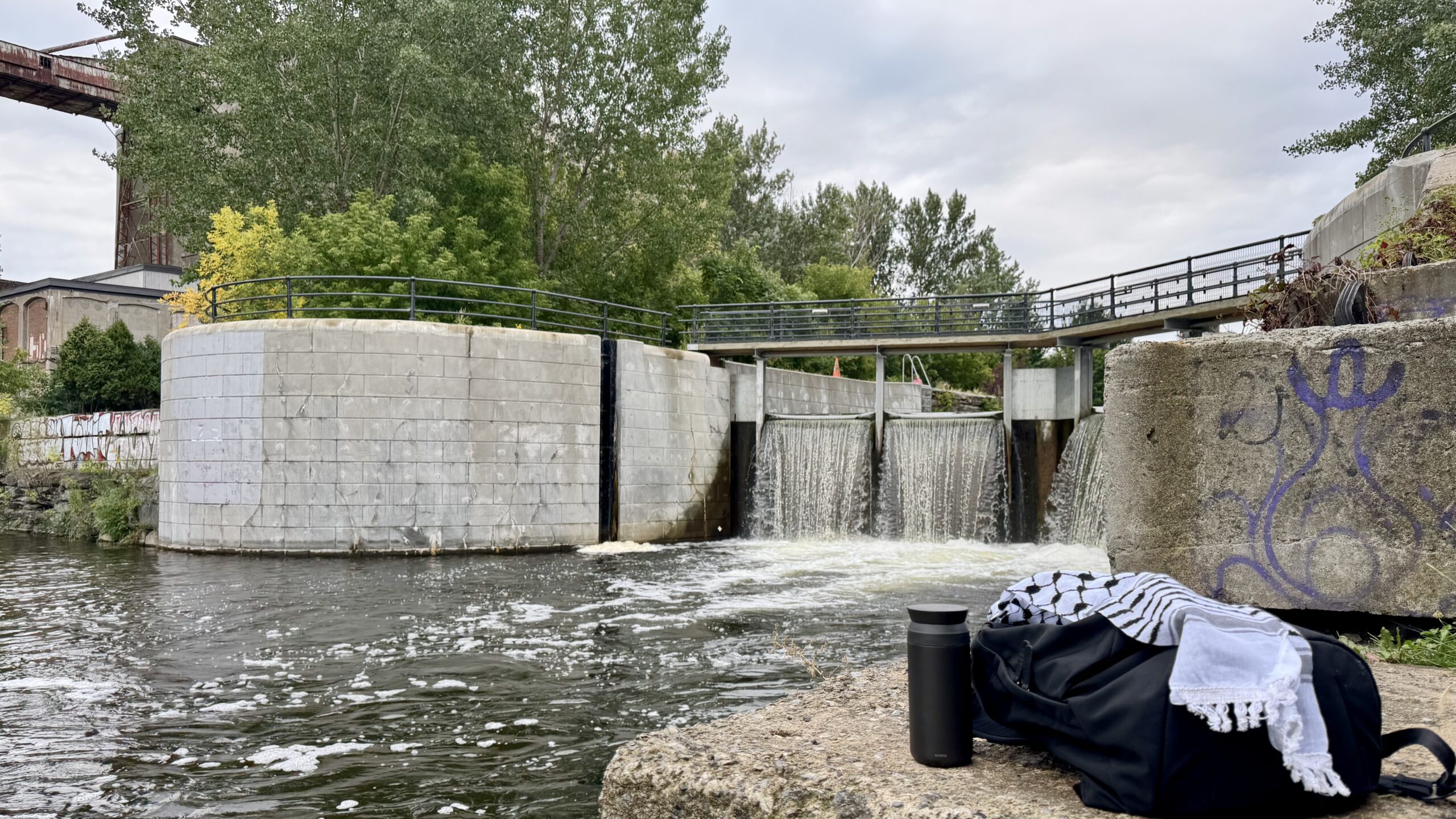
    The sun is warm on my face at the port, and I don’t trust it.
    Midwinter light has no business feeling this gentle.
    The river is frozen hard enough to refuse reflection, to hold its surface without depth.
    Ice tightens everything into place.
    And still, the sun presses against my skin, insistent, intimate, as if it has selected me for a comfort it has not offered the water.

    The warmth settles along my cheekbone, my forehead, the bridge of my nose.
    It feels careful.
    Conditional.
    The kind of warmth that arrives without consequence.

    Below me, the St. Lawrence stays sealed.
    Nothing loosens.
    Nothing yields.

    The body receives what the structure does not.

    I stand longer than I need to. The warmth encourages this. It invites cooperation. I find myself adjusting my posture to keep it where it is, then stopping mid-movement. The river does not respond. Frozen water thickens time, holds things mid-instruction.

    The river has lived many lives. Long before it was drawn into colonial routes, it moved according to rhythms that did not answer to ledger or law. Those rhythms were narrowed, redirected, pressed into service.

    The river was not born into circulation, but it was made to sustain it. Even frozen, that demand remains legible. I feel it in the way the streets pull away from the water, organized and expectant.

    Montréal learned early how to organize violence without spectacle.
    Enslavement here did not require plantations.
    It required houses.
    Parishes.
    Courtrooms.
    Contracts folded small enough to disappear into pockets.

    The river anchored this order without needing to carry every body directly. It stabilized the circulation that made enslavement repeatable inland. Wealth accumulated. Authority settled. Black life moved through kitchens, sacristies, wills, and back rooms—measured, assigned, transferred at the scale of the household.

    I leave the port and begin walking. The sun follows in fragments now, slipping between buildings, touching my face, then withdrawing. My hands stay numb inside my gloves. My feet register the cold through stone and pavement.

    As the river slips out of sight, it does not recede. Its work continues elsewhere—through inheritance records, baptismal registers, domestic routines. Violence did not need the port to remain present. It lived closer than that.

    Warmth keeps insisting. My thoughts turn to fire.

    In 1734, fire tore through Montréal and forced exposure. It moved through homes and businesses, through the interiors where enslaved Black and Indigenous people laboured without legal standing. The fire did not invent violence. It illuminated what the city already contained.

    Marie-Joseph Angélique was accused of setting that fire.
    The archive does not offer certainty.
    It offers procedure.

    She was enslaved.
    She was imprisoned.
    She was interrogated.
    She was tortured.
    She was sentenced.
    She was hanged.

    Fire moved quickly.
    Judgement did, too.

    Walking now, the sun returns as the street opens. It warms my face without softening anything else. I let it stay. Heat has always been read carefully here—allowed when it behaves, named dangerous when it does not.

    The records remain.
    The scaffold remains in description.
    The crowd remains as fact.

    In New France, the work of execution was frequently assigned to enslaved Black men. Settlers refused the role. The state solved the problem by purchasing someone into it. One of them, Mathieu Léveillé, was held in bondage and forced to perform executions for years. The archive places him as the one who likely carried out Angélique’s hanging. It tells us something else, too: that the colony routinely conscripted Black life to enact its most visible violence.

    This fact does not resolve anything.
    It deepens the fracture.

    The executioner’s body was also owned, unfree, positioned to absorb the consequence of an order that required intimacy rather than distance. The rope passed through Black hands—rough hemp against skin just as unfree—because the colony needed it to.

    Angélique’s execution did not interrupt slavery in Montréal.
    It clarified the terms.
    It demonstrated consequence.
    It absorbed the fire into governance.

    Ice forms differently than fire spreads.
    Slowly.
    Quietly.
    Layer by layer.

    By the time I drift back up to Vieux-Montréal, the river is elsewhere, but its cold has stayed with me. I turn towards Place d’Armes without ceremony. The square does not announce itself as a site of death. It behaves like stone and space. People pass through. Traffic moves nearby.

    This is likely where Angélique was hanged.

    This knowledge reaches the body first. The chest tightens. The jaw sets. There is no shift in the square to mark this recognition. The sun touches my face once more, briefly, as if insisting on its neutrality. Nearby, a busker’s rendition of “My Heart Will Go On” bounces off the buildings, unembarrassed, continuous. The warmth does not belong to the place. It belongs to the moment, and the moment does not care where it happens.

    Execution is cold work.
    So is administration.
    So is forgetting.

    I keep walking.

    The warmth thins. Cold resumes its full instruction. 

    By the time I reach home, the sun feels distant, almost unreal. But it stays the way certain facts stay—undeniable, insufficient, instructive. The river remains sealed. The square remains where it is. The archive remains incomplete and operative.

    Nothing has been redeemed.
    Nothing has been resolved.

    What has happened is simpler and harder:
    fire, ice, sun, and walking have entered the same field of attention, and my body has been asked to hold them together without explanation.

    That is part of the afterlife too.

  • There Is No Word for This Grief: On Gaza, Famine, and the World That Watches

    There Is No Word for This Grief: On Gaza, Famine, and the World That Watches

    I wasn’t supposed to be writing this.

    I’m supposed to be writing a comprehensive exam about temporality and health. About how Black queer people live and care for one another in timeframes not designed for our survival. I’m supposed to be providing therapy tomorrow—offering calm, presence, holding—for clients navigating their own overwhelm, grief, burnout. I’m supposed to be finishing a manuscript, drafting another talk, prepping for the next ball.

    But there is a genocide happening in Gaza.

    And I am broken.

    And that’s not what this is about. But it’s also what everything is about.

    Because I don’t know how to move through this world anymore.

    Not in a poetic way. Not in a metaphor. I mean literally. My body doesn’t know what to do with itself. I sit still and I shake. I eat and feel nauseous. I sleep and wake up in a sweat. I walk outside into wildfire smoke so thick that Tiohtià:ke now has the worst air quality in the world—and even still, I know I’m breathing freer than a child in Rafah.

    And what do you even do with that kind of knowing?

    There is a level 5 famine in Gaza.The highest designation possible.
    Thousands of children are already dead from starvation.
    More will die in the coming days.

    And the food is already there.
    Just metres away.
    Across the border.
    In trucks.
    In planes.
    In warehouses.

    Blocked.
    By policy.
    By intention.
    By design.

    This is not a crisis. This is not a natural disaster. This is not an unfortunate byproduct of war. This is a settler colonial genocide. A calculated campaign of extermination. Ethnic cleansing disguised as self-defence. Starvation weaponized. Infrastructure targeted. Grief made endless.

    This is the logic of Zionism.
    This is the logic of empire.
    This is what it means to disappear a people in real time.

    And the world watches.
    Scrolls.
    Shrugs.
    Argues.
    Donates, maybe.
    Then forgets again.

    Because forgetting is the luxury of the unaffected.

    And if you know what it is to be Black, to be queer, to be Indigenous, to be trans, to be displaced, to be criminalized, to be border-crossed or borderless, then you already know this truth: the world is not neutral.

    Not when it comes to genocide.
    Not when it comes to who gets to live.
    Not when it comes to who the world calls human.

    What’s happening in Gaza isn’t unimaginable.
    It’s entirely imaginable.
    That’s what makes it unbearable.

    This is what genocide looks like in the age of livestreams.
    This is what settler colonialism looks like when the camera’s always on.
    This is what fascism looks like when it doesn’t need to hide anymore.
    This is what it means to beg for mercy and be called a terrorist.
    This is what it means to scream for food and be met with silence.
    This is what it means when a child’s life is worth less than the narrative.

    And here we are. Watching.
    In real time.
    As Gaza bleeds.

    I’m not here to offer hope.
    Not the kind you can package.
    Not the kind you can sell.

    Because if you’re watching this and still talking about “both sides,”
    If you’re more outraged by broken windows than by bombed hospitals,
    If your solidarity is contingent on respectability, strategy, or PR optics,
    If your grief only activates when white bodies are harmed,
    Then your humanity is not mine.

    And I am not interested in convincing anyone that Palestinians deserve to live.

    Because life is not earned.
    Freedom is not a prize.
    Liberation is not a matter of debate.

    Palestinians do not need your approval to resist.
    They do not need your permission to mourn.
    They do not need to be perfect victims in order to be spared.

    They are not being starved because of Hamas.
    They are not being bombed because they resist.
    They are being exterminated because they exist.
    Because they are Indigenous.
    Because they are still there.
    Because they refuse to disappear.

    And I am wrecked by this.

    Not just as a witness, but as someone who knows what it means to be told that your life is too complicated to matter.
    Who knows what it means to scream into silence.
    To live in a body that the state treats as collateral.
    To walk through a world that sees your death as routine.

    But this isn’t about me.

    It’s about a father holding the body of his child and saying I’m sorry I couldn’t protect you.
    It’s about people breaking apart stale bread to share with twenty others.
    It’s about the doctor who keeps treating the wounded in the rubble of a bombed out hospital.

    It’s about the poets still writing.
    The dancers still dancing.
    The children still drawing keys to homes that no longer exist.
    The elders still planting seeds in soil they know they may not survive to harvest.

    This isn’t resilience.
    This is refusal.

    This isn’t optimism.
    This is survival strategy.

    This isn’t a tragedy.
    It’s a crime.
    An atrocity.
    A catastrophe authored by cowards in suits and suits in tanks and tanks in children’s bedrooms.

    And still, somehow, there is singing.
    Still, somehow, there is prayer.
    Still, somehow, there is resistance.

    Still, somehow, they live.

    And I want you to understand what it means to keep living in the middle of a genocide.
    To not just breathe—but to love.
    To not just exist—but to refuse.
    To not just survive—but to fight.

    So no, I don’t have the words.
    I have this grief lodged in my throat like shrapnel.
    I have these tears that feel like they betray the scale of the loss.
    I have this ache in my chest from trying to hold space for others while knowing the world is falling apart.
    I have the unbearable knowing that every second I spend writing this, someone else is dying.

    And still—I write.
    Because silence is complicity.
    Because bearing witness is not enough, but it is necessary.

    Because abolition means all cages.
    Because solidarity means now, not after.

    Because Palestine is not a symbol—it’s a place, a people, a love, a struggle that stretches across oceans and generations.
    Because to be Black and queer and abolitionist and breathing in this world is to take a side.

    And I will say it again and again and again, even if my voice shakes:

    From the river to the sea, Palestine will be free.

    And may we live long enough to see that day.

    And may we never forget what we did—and didn’t—do until then.

  • The Wrong Kind of Grief

    The Wrong Kind of Grief

    Who’s Allowed to Mourn in Public—and Who’s Not

    It was quiet at first. Just a few of us lying on the cold concrete outside of McGill University. Keffiyehs folded. Bodies arranged—not for spectacle, but for mourning.
    The die-in wasn’t meant to go viral. It was meant to say what the system refuses to name:
    Gaza is being erased.
    And health workers know what genocide looks like.

    I remember the weight of my own breath as I lay there.
    Not heavy. Not performative. Just present.

    Someone walked by and snapped a photo without asking. Another didn’t stop at all.
    When we stood up, nothing had changed. Not on the street. Not in the news.
    But something had settled in my chest. Something that hasn’t left.

    Because we weren’t only laying our bodies down for Gaza.
    We were laying down with the knowledge that our grief is never allowed to be grief.

    Not when it’s Black.
    Not when it’s queer.
    Not when it’s tied to Palestine, or trans lives, or state violence.

    That kind of grief doesn’t get candles.
    It gets cops.
    It doesn’t get statements.
    It gets silence.
    And sometimes, if we’re not careful, it gets turned inward—
    Treated like something to suppress. Something to explain away.
    Too emotional. Too disruptive.
    The wrong kind of grief.

    Black Grief as Threat

    Black grief has never been read as grief.
    It’s read as aggression.
    As instability.
    As a problem to manage.

    A vigil for a Black life becomes a police incident.
    A protest gets framed as a riot.
    A mother weeps on camera, and the story pivots to property damage.

    This isn’t new.
    But that doesn’t make it any less violent.

    Even in so-called progressive spaces—health orgs, queer collectives, activist networks—there are unwritten rules:
    Don’t cry too hard.
    Don’t speak too plainly.
    Don’t say something that makes people uncomfortable.

    I’ve been in those rooms.
    Told I was “too emotional” for naming what hurt.
    Asked to “come back when calmer” as if grief needed to be reasonable to be real.

    But Black grief doesn’t belong to institutions.
    It doesn’t need to be tidy.
    It doesn’t need to be polite.
    It shows up where it’s needed:
    In kitchens. In bathrooms. In the street. In the quiet moment after the meeting ends.

    And maybe that’s what makes it dangerous.
    That we still feel.
    That we still care.
    That we refuse to forget.

    Because in a world trying to erase us, grieving is a form of resistance.

    Palestinian Grief and the Politics of Denial

    If Black grief is read as a threat, Palestinian grief is denied altogether.
    Or worse—criminalized.

    In recent months, we’ve watched mourning itself become a battleground.
    Vigils banned.
    Flags confiscated.
    Photos of murdered children labeled “too political.”
    The dead rendered offensive.
    The living forbidden to name them.

    The message is clear:
    You can grieve, but not like that.
    Not too visibly.
    Not too loudly.
    Not in a way that disrupts the narrative.

    The same governments funding the bombs demand silence about the bodies.

    But Palestinian grief refuses to stay quiet.
    It pours into streets, onto murals, through chants.
    It insists on being seen—even when the world tries to look away.

    And that insistence resonates.
    Because for many of us—Black, queer, displaced—it feels familiar.
    We know what it means to mourn in public and be told it’s too much.
    We know what it means to be asked to tone it down, make it palatable, put it away.

    Still, we mourn.
    Together.
    In public.
    Without apology.

    Queer Mourning and Rituals of Refusal

    Queer people have always built our own ways to mourn.
    No one gave us space.
    So we carved it out ourselves.

    In clubs. In alleyways. In bedrooms and chat threads.
    We’ve lit candles in parking lots.
    Laid flowers on steps where no police ever came.
    Held vigils that no news crew covered.
    Carried names no one else bothered to say.

    This is part of our lineage:
    ACT UP die-ins.
    Ashes delivered to government steps.
    Protests that doubled as funerals.
    Grief that refused to be silent.

    That legacy is still with us.
    Every time a trans name is whispered online because no outlet printed it.
    Every time someone cries in a bathroom after reading a headline and someone else holds them.

    Queer mourning doesn’t always look like mourning.
    Sometimes it’s awkward.
    Sometimes it’s loud.
    Sometimes it’s just showing up.

    But it’s always a refusal.
    A refusal to grieve quietly.
    A refusal to perform respectability.
    A refusal to act like this world hasn’t taken too much from us.

    This grief is a kind of care.
    Not the kind taught in workshops.
    The kind that says:
    “I see you. I’ll carry this with you. Even if no one else will.”

    Grief That Doesn’t Fit

    I’ve been in spaces where I knew I wasn’t allowed to grieve.
    Not really.
    I could speak, maybe. But not feel too much.
    Not shake the frame.
    Not say something that might get labeled “too intense.”

    Sometimes, the silencing is subtle.
    Someone avoids eye contact.
    A conversation gets politely redirected.
    A room falls quiet—not in respect, but discomfort.

    I remember being told I was ben énervé for naming the violence of Black bodies on slides, with no disaggregated data, no context, no care.
    Just images.
    Just performance.

    I wasn’t angry.
    I was grieving.
    Grieving the way our lives get reduced to symbols.
    Grieving the absence of real recognition.
    Even that was too much.

    Most of us learn to shrink our grief until it fits.
    Until it sounds strategic.
    Until it’s digestible.

    And when it doesn’t shrink, we’re called unstable.
    Disruptive.
    Unprofessional.

    But grief isn’t supposed to make people comfortable.
    It isn’t a moment.
    It’s a condition.

    It lingers in the breath, in the body, in the way your shoulders won’t release even when the meeting ends.

    Some days, I carry it like fog.
    Some days, like glass.
    Some days, it doesn’t arrive until I’ve taken off the mask and closed the door behind me.

    But I no longer apologize for it.
    Because I’ve learned something simple:
    Grief is proof that something hasn’t been taken from me.
    Not yet.

    Toward Abolitionist Mourning

    We need to stop pretending grief only matters when it’s quiet, clean, or backed by institutions.

    We need to stop asking the systems that harm us to validate the losses they cause.

    Abolitionist mourning doesn’t wait for permission.
    It doesn’t ask for policy.
    It doesn’t make pain legible to power.

    It mourns on its own terms—messy, collective, unsanctioned.
    It stays with what hurts.
    It lets the wound speak.

    We’ve always known how to do this.

    Black and Indigenous people have mourned in ways the state can’t hold.
    Palestinians have carried memory through exile and massacre.
    Trans people create rituals that no church would sanctify.

    We don’t need more professionalization of pain.
    We need more space for its truth.
    More honesty.
    More refusal.

    Because grief is not what breaks us.
    What breaks us is having nowhere to put it.
    And what repairs us—if anything does—
    is knowing we don’t have to carry it alone.

    We’re Still Mourning

    We don’t need the state’s recognition to make our grief real.
    We don’t need institutions to validate what our bodies already know.
    Our mourning isn’t excessive.
    It isn’t disruptive.
    It isn’t unprofessional.

    It’s memory.
    It’s survival.
    It’s care.

    And it’s not going anywhere.

    If the world refuses to hold our grief,
    then we will keep finding other ways to carry it.
    We will light candles where they say we can’t.
    We will chant the names they refuse to speak.
    We will gather in the cracks and hold each other there.

    Our grief isn’t the problem.
    The problem is a world that only makes space for it once we’re gone.

    We’re still here.
    We’re still mourning.
    And we’re not asking for permission.

    Fediverse Reactions
  • The Weight of Absence: On Boundaries, Accountability, and the Politics of Disappearance

    The Weight of Absence: On Boundaries, Accountability, and the Politics of Disappearance

    There are moments when absence carries more weight than presence. When the space someone leaves behind doesn’t just signal distance, but a rupture. A confirmation of something you hadn’t yet said aloud. Not all harm is loud. Some betrayals unfold in silence. Sometimes, the deepest wounds are not from what was done, but from what was not.

    I have always believed that friendship is a site of responsibility. To love someone is to be present. To recognize that relationships require more than shared joy. They require care, reciprocity, and repair. That belief has sustained me, but I have seen how quickly care turns conditional. How easily people disappear when accountability enters the room. Some people are only available for ease, not for the work that love demands.

    This was not just one moment. It was not just one conversation. It was a pattern, a structure, a political reality that plays out in the intimate corners of our lives. I have seen how non-Black people, particularly those whose identities grant them proximity to whiteness, expect the safety of Black friendship without the responsibility of real care. They want the warmth. The way we hold space effortlessly. The way we know how to make people feel at home. But the moment we ask them to hold something heavy, they vanish.

    I used to think these disappearances were about me. That if I had softened my words, made my pain easier to hold, things would have turned out differently. But I know better now. This is what proximity to whiteness teaches—to evade, to deflect, to disappear rather than engage. It is a refusal to be seen as someone who can harm. A retreat into silence, into absence, into the ease of never having to reckon with what it means to be in real relationship with Black people.

    I named what had hurt me. I set a boundary. I said: this is where I end. Instead of sitting with discomfort, they called me rigid. Unforgiving. I have seen this before, and I refuse to let it shape what I build next. Black people are told we are too accommodating, too forgiving, too available. Yet, the moment we assert our limits, we become too harsh, too difficult, too unwilling to let things go. This contradiction is not accidental. It is structural. It is what happens when you are seen as something to be held for comfort, but never engaged with as an equal.

    And so they disappeared. Not with an apology. Not with an attempt to repair. They vanished in the way that people do when their presence was never meant to be sustained. A blocking, a shutting down, a refusal to sit with what had been broken. A settler-colonial logic of disposability, played out in friendship.

    I have seen it before. I have learned. People who cannot meet me in presence do not deserve my time. Moving forward, I am choosing relationships where care is not an afterthought, where presence is not conditional, and where accountability is not treated as a burden.

    Care without accountability is not care at all. It is convenience. And I refuse to make myself convenient.

  • Joy, Survival, and the Refusal to Be Broken

    Joy, Survival, and the Refusal to Be Broken

    Notes from a Night of Performance and Resistance

    As Saidiya Hartman reminds us, Black life moves through the tension of mourning and survival, a condition intensified for Black queer and trans people whose very existence challenges the terms of the social order. In a world structured by anti-Blackness, where exhaustion is manufactured and joy is framed as indulgence, Black pleasure is a radical act of refusal. It is a practice of world-building amid dispossession.

    This refusal, this reclamation, is what I found myself reflecting on last night at the Wiggle Room in Tiohtià:ke, where I attended a burlesque show wrapped in the language of tarot and transformation. The performances that unfolded were not simply acts of entertainment, but rituals—embodied acts of storytelling that spoke to the precarity and possibility of life under structures that seek to contain us.

    Each performance was shaped by the energy of a different tarot card, an invocation of mysticism woven into movement and presence. The night had been playful, filled with laughter and cheers, until Phoenix Inana took the stage. Unlike the other performances, theirs was not burlesque—it was performance art, and it demanded silence. A rupture in the rhythm of the night.

    Phoenix embodied The Devil, but through deliberate intervention, they transfigured the archetype—not as a warning of corruption, but as an opening toward self-possessed liberation. They wove The Devil into the figure of Lilith—a symbol of defiance, a body ungoverned, a refusal to be subdued. In dominant narratives, The Devil is a sign of excess, indulgence, a descent into desire. But in Phoenix’s hands, The Devil became something else entirely: an opening, a confrontation with the self, a refusal to abide by the moral logics that have long been used to discipline those cast as deviant. Their movement, measured and defiant, enacted what Mackey calls affective choreography—a performance that is not for spectacle but for insurgency, refusing the logics of discipline.

    As Hortense Spillers reminds us, the body under colonial and patriarchal orders is always already marked for discipline. To reclaim the figure of The Devil—through Lilith, through the rejected feminine—is to refuse the very foundations of that discipline. The room held its breath as Phoenix moved—deliberate, magnetic, speaking in a language beyond words. They did not perform for an audience; they conjured something larger, something uncontainable. A reckoning with desire, with shame, with the ways we have been taught to fear our own hunger for pleasure, for freedom, for more. In that moment, The Devil was not a force of corruption but of possibility—the permission to exist outside of the constraints imposed upon us.

    Before the performance began, I noticed a tarot card had been left on my seat—the Eight of Cups. I didn’t think much of it at first, but later that night, after stepping into the cool air outside the venue, I pulled out my phone and looked up its meaning. Departure. Choosing oneself. The aching, necessary act of walking away. The card’s imagery—cups abandoned, a figure moving forward—settled into my chest.

    It was a lesson I have met before. One that keeps finding me. To leave is not to retreat but to carve out the possibility of elsewhere—to refuse the exhaustion of extractive institutions and instead move toward Black queer possibility. In the afterlife of slavery, where Black life is both hyper-visible and disposable, departure is not just a metaphor—it is a method of survival. We leave institutions, relationships, even versions of ourselves, because survival demands movement.

    I carried that message with me as I lingered after the show, laughing, exhaling, held in the kind of embrace that only chosen family provides. The space between us—our breath, our joy, our indulgence in the moment—was a refusal. Not an escape, not a reprieve, but an insurgency. These nights are not outside of struggle; they exist in direct opposition to the anti-Black, capitalist systems that demand our exhaustion, our suffering, our depletion.

    These spaces of performance, of radical belonging, exist within a lineage of Black queer world-making. One of the most enduring examples of this is ballroom—a subcultural movement rooted in the survival of Black and Latinx queer and trans communities. Ballroom was born out of necessity, a direct response to anti-Black and anti-queer exclusion from white-dominated LGBTQ+ spaces in the mid-20th century. It became not just a venue for performance but a site of kinship, a world where categories of gender, beauty, and realness were reimagined on Black and brown terms.

    Ballroom operates as a Black queer counterpublic—an insurgent archive of survival, where kinship is built outside the logics of capitalist extraction, and where the aesthetics of gender, performance, and belonging are constantly being rewritten in real-time. While ballroom remains deeply rooted in Black and Latinx history, it has also grown into a space where others who have known displacement, resistance, and the urgency of chosen family can find belonging. As Godmother Phoenix Inana Sankofa LaBeija, she has taken up the role of mentor and guide, carrying forward the commitment to craft, care, and those who come after. Her position within ballroom is not just a title; it is an obligation—to those who seek space in a world that denies them room to breathe.

    The world grinds us down. It tells us that we must earn rest. It frames joy as frivolous. And yet, we choose otherwise. We gather. We celebrate. We insist upon ourselves.

    To persist is to resist, but to insist on joy is to demand livability—not as a concession, but as an act of abolitionist defiance, a refusal to let extraction be our only inheritance.

    The Eight of Cups is a departure, yes, but it is also a return—to self, to possibility, to the world we are making together. As I walked out of the Wiggle Room, my fingers still tracing the Eight of Cups in my pocket, I felt something shift within me. Sometimes, the universe delivers its messages in grand gestures. And sometimes, they arrive in a performance piece that demands silence. A tarot card left on a seat. A night spent in the presence of those who see you fully.

    And sometimes, those messages are simple but profound:

    Keep going.
    Keep choosing yourself.
    Keep finding joy.

    Because that, too, is resistance. That, too, is survival. And even when the world gives us nothing, we will make ourselves—together.