Tag: Time

  • Fool’s Spring

    Fool’s Spring

    The air is doing something it has no business doing in March.

    I notice it before I’m fully awake to noticing—something in the chest, a small release, the jaw unclenching in a way I didn’t realize it had been clenched. I’m already on the route when it registers. The cold that’s been structural for months, the kind that doesn’t ask permission and doesn’t negotiate, it’s just gone today. In its place there’s this softness, almost embarrassing in how good it feels, like the city decided to be generous without warning and didn’t tell me in advance so I could defend against it.

    People are outside. Not the usual bundled determination of Montréal winter movement, heads down, getting somewhere. Actually outside, taking up space, faces turned up. Someone’s dragged a chair onto the sidewalk in front of a café that has no business having outdoor seating yet. A man is standing on the corner doing nothing, just standing there, which you don’t see in February. A woman I pass makes eye contact and almost smiles and I almost smile back and we both look away like we almost said something too honest.

    The city’s doing the thing—I know the thing, I’ve watched it happen enough times to recognize it immediately—and I can’t do anything with that recognition because the body doesn’t care what I know. The shoulders drop anyway. The pace slows. Something lets go without asking.

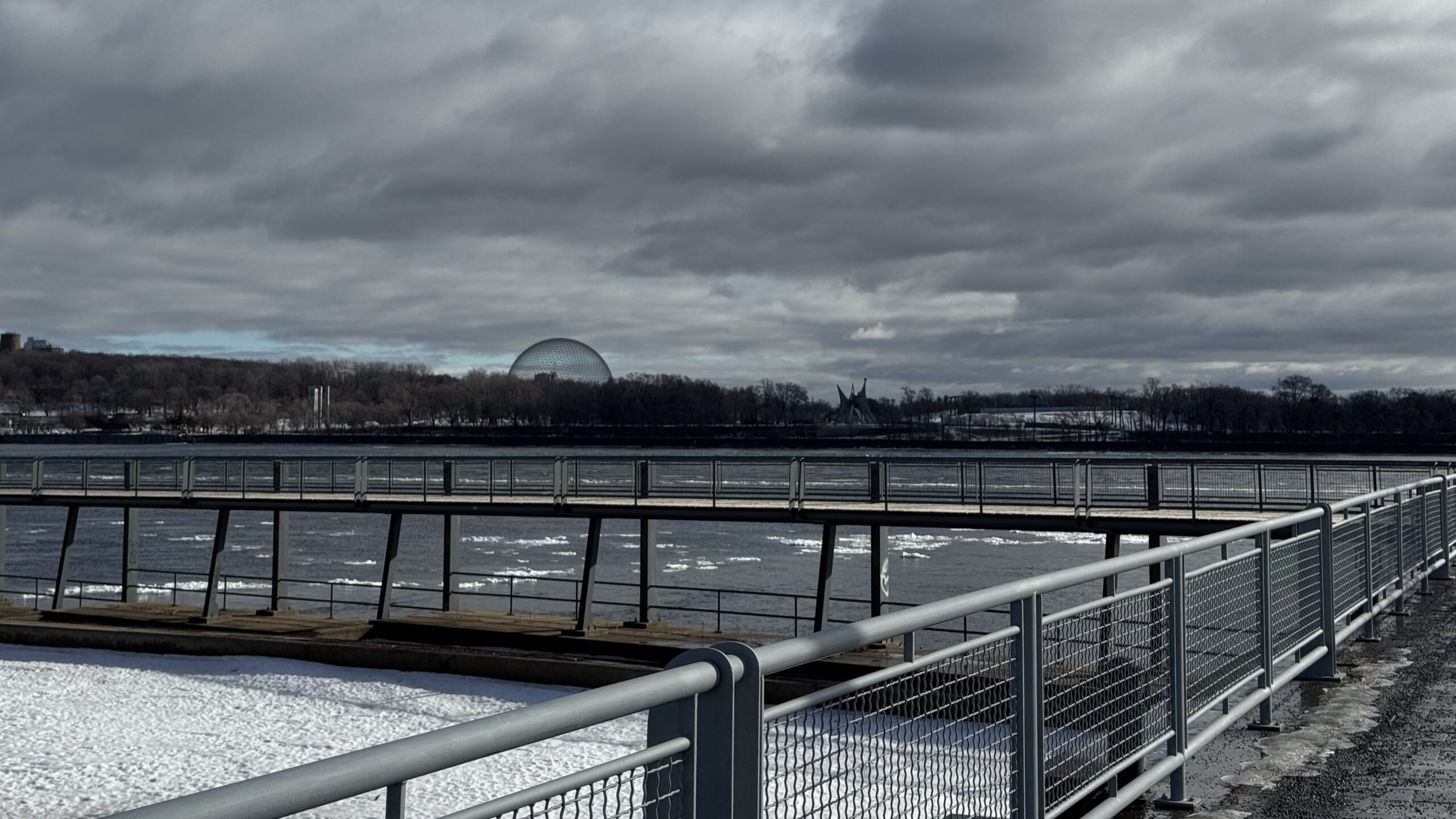
    I’ve been coming to this route since November, which means I’ve been here long enough to watch the river do everything it’s done this winter. Not every day, not with any intention exactly. Just when the body needed somewhere to put itself that didn’t require anything back. The Old Port in winter is good for that. Nobody’s performing anything. The tourists are gone, the terrasses are stacked and wrapped in plastic, and what’s left is the river and the cold and whoever else needed to be somewhere that wasn’t inside their own head.

    I watched the freeze happen in pieces. First the edges, where the water slows against the bank and the cold gets a foothold. Then the surface thickening gradually, going from dark and moving to grey and uncertain to the flat white that means it’s held. There was a week in January where the ice looked almost translucent in the afternoon light — blue-green, the kind of colour that doesn’t seem like it belongs to winter. I stood there longer than made sense. I didn’t write about it. I just kept it. There was a morning in February where snow had covered everything overnight and the whole surface went illegible, no texture, no variation, flat white meeting flat white at the horizon. The river looked like it had stopped being a river. Like it was waiting for instructions. I remember thinking the cold that morning felt almost like clarity, which made no sense given that nothing was clear, but the body makes its own logic and I’d learned by then to let it.

    So when I come around the corner today and the river is moving—not fully open, there’s still ice out toward the middle, still that grey-white surface, but along the edges it’s dark water again, actual current—I stop without deciding to stop. I don’t know exactly what I’m registering. Just that it matters, the way some things matter in the body before the mind has caught up with why.

    What I understand now, that I didn’t know walking those winter mornings, is that I was memorising. It felt like the opposite—like emptying out, like just moving through cold air with nothing required of me. But the body was doing something the mind hadn’t signed off on yet. Storing details. Noting the specific quality of light on ice in January. Learning the weight of this particular stretch of waterfront at this particular time in my life. That’s what grief does before you’ve named it as grief: it makes you pay attention. It starts archiving without asking. It turns ordinary routes into records of something you’re not ready to call an ending yet. And then I look up, and the city is still here, doing what it does, and I feel it anyway.

    Montréal means it, though. That’s the part that’s always been hard to hold alongside everything else. When the warmth comes back and people spill out onto the sidewalks and strangers almost smile at each other, that’s real. There’s a genuine porousness to this place when the conditions allow it, a capacity for collective ease that I haven’t found anywhere else in quite the same register. I’ve loved this city through every version of myself. It taught me the pace of winter light and what care looks like when it’s built inside contradiction rather than despite it. The friends who showed up, the communities that held me, the particular way people here make room for each other in the margins of a place that isn’t always making room officially—that’s not nothing. That’s actually most of what I know about survival.

    And it’s all present today. I can feel it in how the city moves, the way the warmth loosens something collective and for a few hours everyone’s a little more available to each other. I’m not outside it. My chest opened on this walk the same as everyone else’s.

    But I’ve also lived here long enough to know the pattern. The warmth is real and then the policy conversation starts and the belonging turns conditional again. The city that holds you and then asks you to be less legible in certain rooms, to translate yourself into something more manageable, to accept that your safety is negotiable in the name of neutrality or order or whatever word is doing that work this season. The fool’s spring is the actual structure of what it’s been like to do Black queer abolitionist work here. The opening and then the slow close. The genuine warmth that never quite becomes something you can count on. You feel it every time. That’s not naivety. It’s just how it goes.

    What I didn’t expect today is that none of that would settle the question.

    I’ve been thinking of the leaving as something already decided, the walks a form of goodbye that was already underway, the compression becoming its own kind of instruction. And I still think that’s true. But today, in this light, with the river moving and the city briefly being the version of itself that I fell for, I don’t know. Not in a way that changes anything concrete. Just in the way that honest things are sometimes more complicated on good days than on hard ones. The hard days make the leaving feel obvious. The good days remind you what you’d actually be leaving. Neither one gets to be the whole truth.

    I keep walking. The warmth stays on my face. I let it.


    Somewhere in the middle of winter, I started reading job postings from small university towns.

    Not obsessively, not with a plan. Just tabs that stayed open longer than they should have, descriptions of places I’d never been that I kept returning to without quite knowing why. Towns I’d have to look up on a map. Departments small enough that you’d know everyone’s name by October. The kind of campus where the work would have to speak for itself because there’s no scene to situate it in, no institutional politics to navigate before you’ve even started.

    I told myself it was practical. The PhD is ending, the market is the market, you apply where there are positions. That’s true as far as it goes. But it doesn’t explain why those particular postings were the ones I kept returning to, or why imagining a smaller place felt less like settling and more like something the body was quietly asking for.

    I think my nervous system has started making cartographic decisions. The way this city lands on me now, the weight of it — some part of me has figured out that scale is something I can actually change. There’s a version of this work that happens somewhere I’m not already exhausted before I begin. I keep picturing a quality of morning more than a specific place. The kind where the first thing the body does is breathe. Where you can walk to work and the walk doesn’t cost anything, doesn’t pass three corners each carrying a different memory of who you were trying to be when you lived near there. Where the air is just air and the river, if there is one, doesn’t know your whole history.

    I know how that sounds. Like I think a different postal code is going to fix something that lives in the body and travels with it. I know the difference between changing your circumstances and outrunning yourself. But environment is not neutral, and it’s taken me years to trust that fully. Doing this work in a city where it’s legible but not exactly welcome, where every institutional conversation requires a translation tax, where you’ve spent years learning to make yourself understood in rooms architecturally designed not to understand you — that accumulates in the tissue. I’m not burned out in the generic sense. I’m tired in a specific and located way. Tired of the particular labour of being this person in this place at this moment in its politics. More rest isn’t going to fix that. Distance might.

    The teaching keeps coming up too. As something I actually want, in a way that’s become clearer the more depleted I’ve gotten here. Students who haven’t encountered this work before. A classroom where abolition isn’t the assumed vocabulary, where I’d have to find new ways in rather than spend energy defending the door. There’s a version of the work that gets lazy when it only ever talks to people who already agree, and I think I’ve been in that version for a while without fully admitting it.

    Small university towns have their own whiteness, their own particular loneliness for someone who looks like me. I’ve read enough from Black scholars at isolated institutions to know that the quiet I’m picturing can curdle — a different kind of exhaustion, the work of being the only one in the room following you into a different room in a different city. But there’s a difference between what I’ve been absorbing here and the difficulties I’d carry somewhere new. One feels like something the city does to me. The other would at least be mine to navigate on my own terms.

    I can go. That sentence is doing a lot of work. It’s a function of a passport, of citizenship, of options I didn’t earn so much as inherit through a specific geography of luck. Some of the people I love and do this work beside don’t have the same calculus available. The border that’s an inconvenience for me is a wall for others. There’s something uncomfortable about framing mobility as nervous system regulation when mobility itself is structural power. The leaving doesn’t stop being a privilege just because it’s also a need. That discomfort doesn’t get resolved by naming it. It just gets carried more honestly.

    The tabs stay open. The towns stay imagined, their particular quiet, the version of myself that might exist there. On the hard days that feels less like fantasy and more like information.


    I’m still walking this route. That’s the strange part.

    The body still knows every texture of this waterfront, every place where the pavement shifts or the wind comes off the water differently. I still stop at the same spots without deciding to. I still look for the light in the same places. Nothing about how I move through here has changed, and yet something is already gone. Not left exactly. Loosened. The way attention shifts before the body follows.

    I’ve been looking at this city too carefully for months. Too completely. Taking in details I never bothered with before — the particular colour of the light on Saint-Laurent in the early evening, the sound the métro makes pulling into Beaubien, the way snow sits differently on the mountain than anywhere else. It feels like love and it is love, but it’s also the beginning of an archive. You don’t memorise what you’re certain of keeping.

    The walks have been this. Every time I’ve come down to the river since November, I’ve been doing something I didn’t have language for until recently. Saying goodbye to a place I haven’t left yet, to a version of myself that is going to stay here even after I go. There’s grief in that and also something steadier than grief, something that doesn’t have a clean name. The body moving through familiar space one more time, not performing anything, just letting it register fully before the register closes.

    I’m still here. I’m already elsewhere. Both of those are true right now, on this same walk, in this same body, and I’ve stopped trying to figure out which one is more real.

    The warmth is still on my face when I turn back toward home.

    I didn’t ask for today. Didn’t need the city to do this right now, to be this version of itself while I’m in the middle of figuring out how to leave it. It would’ve been easier if March had just stayed March, stayed hard and grey and unconvincing. Instead it gave me this — the river moving, the strangers almost smiling, the chest opening before I could stop it. The kind of day that doesn’t argue with you. It just arrives and expects you to feel it.

    So I did. I let it in.

    I don’t know if I’m leaving. I know the tabs are open. I know the towns are still imagined, their particular quiet still hypothetical, the version of myself that exists there still unverified. I know Montréal is still the place that made me and that making doesn’t undo itself just because I’m tired.

    The river will freeze again next winter whether I’m here to watch it or not.

    The warmth will be gone in a few days. The cold will come back and close things over again. That’s fine. It got in while it could.

    The body knows the route either way.
  • The Body as First Register

    The Body as First Register

    My body has been the first place where things gather. A pressure sits in my back—a low bracing that has begun to feel structural, the kind of tightness that doesn’t shift with stretching or rest. It moves without ever fully leaving. Some days it settles between my shoulder blades; other days it spreads into my neck or rests heavily in my hips. The sensation is diffuse, hard to locate, yet immediately recognizable once it arrives. Everything feels slightly drawn inward, as if the body has deliberately narrowed its range.

    The ache doesn’t spike. It remains steady, more background than signal. Muscles stay engaged even at rest, as if something still needs holding and hasn’t yet been set down. There’s a readiness in it, though nothing immediate is forming. I notice it most when I slow down. Sitting brings it into focus. Pausing sharpens it. When movement stops, the pressure moves forward and the body organizes itself around it. The sensation doesn’t ask for attention; it simply refuses to disappear.

    Living this way has altered how I understand what’s been happening. The body feels occupied, involved in something ongoing—not injured, not malfunctioning, but engaged in sustained effort without a visible task. This is the place I’m writing from: a body compressed and alert at once, held together without a complete story yet for what that holding is preparing for.

    A Quiet Overwhelm

    Over time, it became clear this wasn’t random. The body was registering something before I had language for it. The tension built gradually, without a single moment to point to, accumulating over weeks and months and settling quietly rather than arriving all at once. What surprised me was the form this overwhelm took. There was little panic—no rush, no spike, no outward agitation. Instead, things slowed. Initiation became difficult. Small tasks grew dense. The body responded by becoming still, narrowing its range, holding position.

    I would sit in front of my laptop with the lid open, the screen dimming itself while I stayed there, hands resting on the keyboard without moving.

    This kind of stillness is easy to misread. From the outside, it can look like avoidance or delay. From the inside, it feels like containment. Energy pulls inward. Movement pauses. Output reduces. The system stays intact by limiting how much it releases at once. I began to recognize the pattern as it repeated. Each time something shifted—each time another layer of uncertainty entered—the body tightened slightly, not as protest but as stabilization, a way of staying upright, of keeping things from spilling.

    There’s information in that response. An early warning that doesn’t speak in sentences. The body adjusts first, marking change through sensation and letting the holding register before the story catches up. Over time, this read less like pathology and more like pattern recognition: the body noticing accumulation and responding in the only way it knows how—by slowing down and staying in place until the next shape becomes clearer.

    Loosening Frames

    At the same time, several forms of scaffolding have been loosening—not abruptly, but through gradual unfastening, felt before it was fully understood. The PhD is coming to an end, along with a structure that has carried weight for a long time. Its timelines and rhythms organized my days and sense of direction. As that frame thins, the body seems to notice first. The absence registers as space, and space carries its own pressure.

    The lease is ending too. The rooms I move through each day no longer feel fixed. Space has become provisional. The body responds by staying alert, keeping itself gathered. Even familiar corners take on a different texture when they’re no longer guaranteed. Beyond that, the next steps remain unformed. There isn’t a clear container waiting to take shape. This doesn’t arrive as a dramatic void. It appears as a background hum that keeps the body from fully settling.

    All of this unfolds within a broader atmosphere that never quite recedes: political instability, escalating violence, systems coming undone. These conditions don’t remain outside personal life. They enter the body like weather, a constant barometric shift that makes everything heavier and harder to place. None of these shifts stands alone. They layer, overlap, and accumulate. The body holds the sum of them, adjusting quietly as the ground shifts underneath.

    Where Things Stall

    As these layers built, freeze began to appear in ordinary places, in small procedural moments. Initiating simple tasks took longer. Messages lingered unopened or half-drafted. Anything requiring sequencing or follow-through felt dense. Often the body reacted before thought finished forming. A screen would open and something in my back would tighten. An inbox would load and the body would brace. Lists and calendars brought on a full-body pause—immediate and physical—as if the system had already shifted gears.

    Mail collected on the edge of the table, unopened, the same envelopes moved from one corner to another over several days.

    Stillness became common. Movement narrowed. Energy pulled inward. Attention shortened. The effort to move from one small step to the next increased. The body organized itself around slowing down, especially where accumulation was highest—administrative tasks, ongoing correspondence, anything requiring continuity across time. Engagement reduced. Output thinned.

    Seen closely, this freeze carried information. It mapped density. It marked where too many threads were being held at once. The system paused to stay intact until pressure eased enough to allow movement again. Over time, the stillness took on shape. It wasn’t empty. It occupied space. Muscles gathered around it. The pause held.

    What Can Be Held

    When several structures loosened at once, the body narrowed its field. When demands accumulated without clear edges, movement reduced. Fewer motions. Fewer decisions. The body stayed closer to itself. Engagement continued in some places and not others. Tasks requiring sustained attention stretched the system thin. The body responded by slowing initiation and working in short intervals.

    The pause had boundaries. It wasn’t total or random. It clustered around sequences that extended forward without a clear end. The body adjusted its pace to what it could hold without spilling.

    The narrowing had a threshold
    Enough.

    The Form No Longer Fits

    The decision to end my private practice arrived through the body. It showed up as contraction, as effort that no longer redistributed. The work remained meaningful. The form no longer fit. Capacity and structure stopped aligning in a way the body could negotiate. I noticed it in the preparation it took, the recovery afterward, the back tightening before language did. The work demanded continuity across time.

    And something in me would not go there again—not cleanly, not fully, not without paying a cost I could already feel.

    The body responded by pulling inward, signaling a limit that didn’t soften with reassurance.

    The decision wasn’t dramatic. It settled slowly through repetition. Each return to the question carried the same physical answer. There is grief here, low and steady—a grief for a form that once held something real, for relationships shaped through care, for a version of myself that lived inside that structure.

    Responsibility remains. It appears in careful timing, in communication, in how endings are handled. The body still holds that weight even as the boundary is set. Ending the practice feels less like rupture than closure—a form laid down because it no longer matches what the body can sustain. Care remains. The limit remains. Both are held.

    Work Beneath Stillness

    What began to make sense was the compression itself—the narrowing, the inward pull, the body staying gathered. There’s logic in that compression. When a form is no longer viable, work turns inward. Systems reorganize without consulting the calendar. Energy reroutes. What once moved outward turns back toward center.

    This phase doesn’t look spacious or restorative. It’s dense, pressurized, full of friction. Beneath the surface, the body works continuously—redistributing weight, testing configurations not yet named. From the outside, little changes. Movement slows. Output thins. Inside, everything remains active.

    There’s no timeline attached to this work. The body stays in it as long as needed, reorganizing around what can be sustained next. This isn’t rest. It’s internal labor.

    Care Finds Its Scale

    As this reorganization continues, my relationship to care and obligation shifts. The body responds differently to what asks for attention. Some requests land cleanly. Others stall before reaching language. Care feels more precise now. It gathers around what can be met without strain. Long arcs of responsibility register as heavier as they extend forward.

    Obligation has slowed. Urgency has thickened rather than intensified. Timing and pacing matter more. Commitment hasn’t disappeared; it has cooled. Energy collects before release. Attention stays closer to center, conserving what hasn’t finished forming.

    This doesn’t feel like withdrawal. It feels like recalibration. Care finding a shape that matches capacity. Responsibility adjusting its scale. The body setting a tempo it can maintain. What I’m allowing arrives quietly: accompaniment without translation, delay without panic, unfinishedness without collapse. Messages wait. Tasks unfold over days. Threads remain open.

    I’m allowing the body to set the pace, letting sensation determine when to move and when to stay still. I watch where effort gathers and where it drains. These allowances aren’t generous; they’re necessary. They create just enough room for the system to keep reorganizing without tearing.

    Orientation

    Where I am now feels specific. The compression remains. The pressure hasn’t lifted. The body stays alert, organized around holding. At the same time, there’s less confusion inside it. The sensations are familiar enough to be read. I move more slowly—not hesitantly, but attentively.

    I walk the same short route most mornings, past the same trees and parked cars, noticing how often I stop without realizing it.

    There’s steadiness here—not ease, but orientation. The body recognizes itself in this compression. It knows how to stay upright. I’m not waiting for resolution or trying to see past this moment. The present has texture: dense, close, manageable in small spans. The body stays with what’s here.

    This feels like a place rather than a passage.

    Arrival, for now, looks like remaining intact—staying in relationship with the body as it does this work, letting sensation lead without rushing it into meaning. Integrity lives here: in listening and pacing, in allowing form to change without demanding a finished outline. What comes next will arrive when it’s ready. For now, the work is contained in this holding. The body stays steady and attentive until the shape ahead becomes clearer.

  • Time, Held

    Time, Held

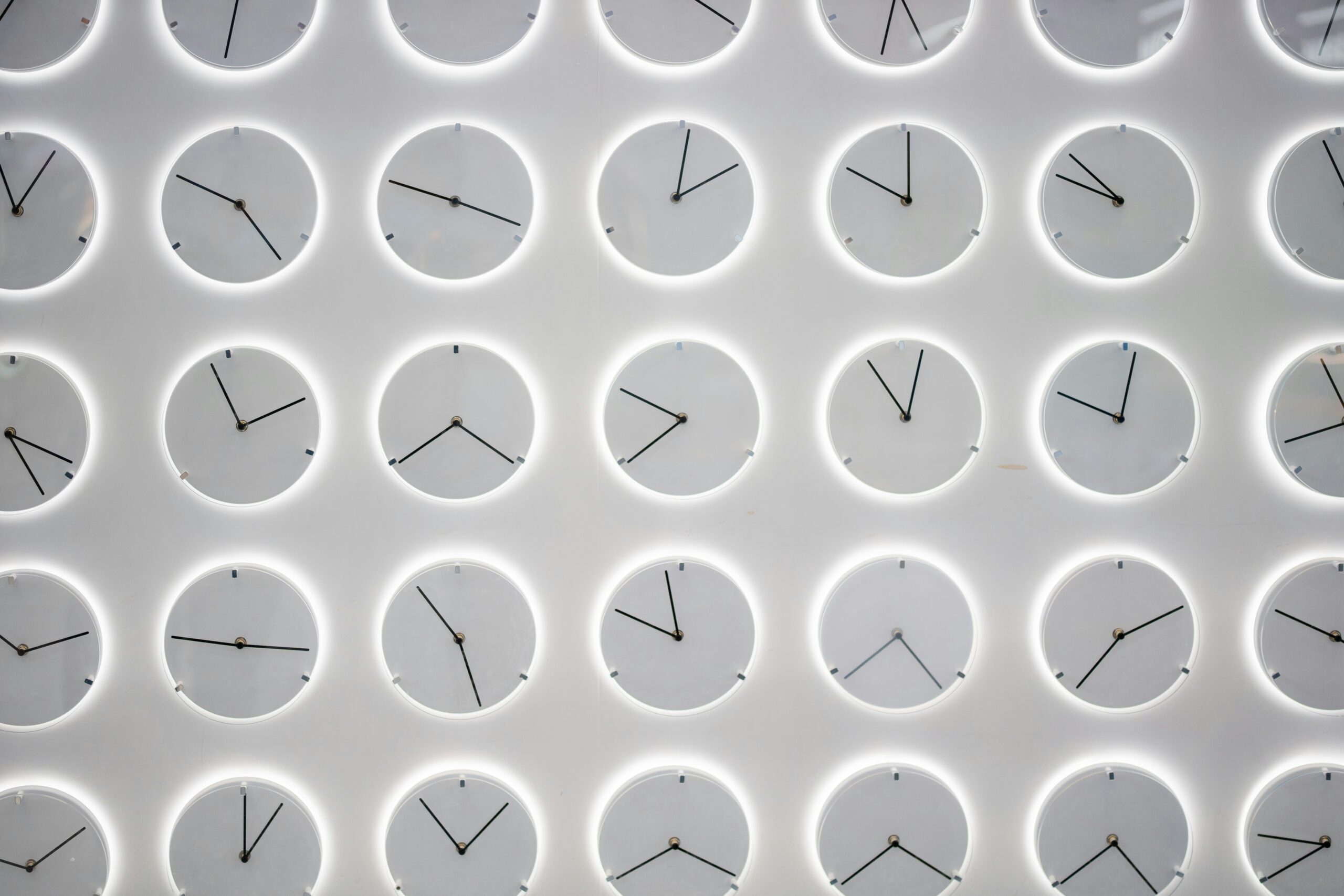
    Time arrives before anything happens. It shows up early, settles in, rearranges the day around itself. You learn it through how the body prepares. Through the way the chest stays slightly lifted, like it’s waiting for a tap on the shoulder. Through how often the jaw tightens when the phone lights up. Through the reflex to count days without meaning to.

    Empire works through this kind of time. It lets it sink in slowly. It gives people enough room to adapt, enough repetition to make endurance look like a personal trait. Lives stretch around renewal dates and review periods. Everything keeps moving, but nothing quite lands. You learn how to hold your life lightly, how to keep your belongings minimal, how to stay ready to shift without being told to move.

    People live for years inside extensions. Inside temporary permissions. Inside measures that circulate without ever settling into something solid. Life fills the space anyway. Dinners get made. School lunches get packed. Work schedules get memorized. Love keeps happening. All of it unfolds on ground that never fully firms up. You learn to distribute your weight. You learn where not to lean too hard.

    Joy still arrives, but it comes with an internal clock already running. You feel it tick while you’re laughing. While you’re planning. While you’re letting yourself believe something might hold. Celebration becomes careful. Plans stay provisional. Even rest carries a low hum of alertness, as if the body doesn’t quite trust that it can go all the way down.

    This kind of time wears people without leaving marks you can point to. It teaches the body to stay available. Sleep thins out. Attention fragments. You start measuring life in cycles you didn’t choose. Renewal cycles. Processing cycles. Waiting cycles. Each one asks for patience. Each one takes a little more capacity with it.

    Policy relies on this. Fatigue funnels what feels possible. When energy gets spent managing uncertainty, very little remains for anything else. The week becomes the unit of survival. The future starts to feel abstract. You make decisions based on what requires the least explanation, the least exposure, the least risk of being noticed.

    Urgency moves unevenly through this system. Some situations stop everything. Others stretch on quietly, absorbing days, months, years. Loss waits its turn. Harm gets filed, deferred, assigned a new expected timeline. You feel the delay in how long it takes to breathe normally again, in how quickly hope retracts when it gets too loud.

    The language surrounding all of this stays calm. Dates appear. Updates get promised. Progress gets implied. These words move smoothly through official channels. They sound steady. They invite trust. They ask for composure. They ask people to keep showing that they can handle it.

    And still, time gets made elsewhere. In kitchens where stories don’t arrive in order. On dance floors where the body follows sensation instead of sequence. In care networks that move when someone needs something, not when a form clears. Memory bends time. Touch compresses it. Grief stretches it. None of this asks to be scheduled.

    These practices don’t wait for recognition. They happen because life keeps insisting. Because care has its own tempo. Because people stay with each other even when everything else feels provisional. These rhythms don’t resolve the waiting, but they interrupt its authority.

    Empire manages time by distributing it unevenly. By deciding who gets to arrive and who must remain in motion. Who is allowed to settle and who must stay ready. Who is worn down slowly enough that it looks procedural. Paying attention to time means noticing how power moves quietly, through calendars, deadlines, queues, and the long spaces in between.

    There isn’t a clean ending to this. Time under empire leaves residue. It stays in the muscles. It shows up in how cautiously people plan, in how often joy gets delayed, in how carefully hope is rationed. Naming that doesn’t make it disappear. But it does bring the clock into the room. It lets the weight be felt together.

    And sometimes, that shared awareness is where movement begins.