Tag: Transitions

  • Peel Basin, 09:15

    Peel Basin, 09:15

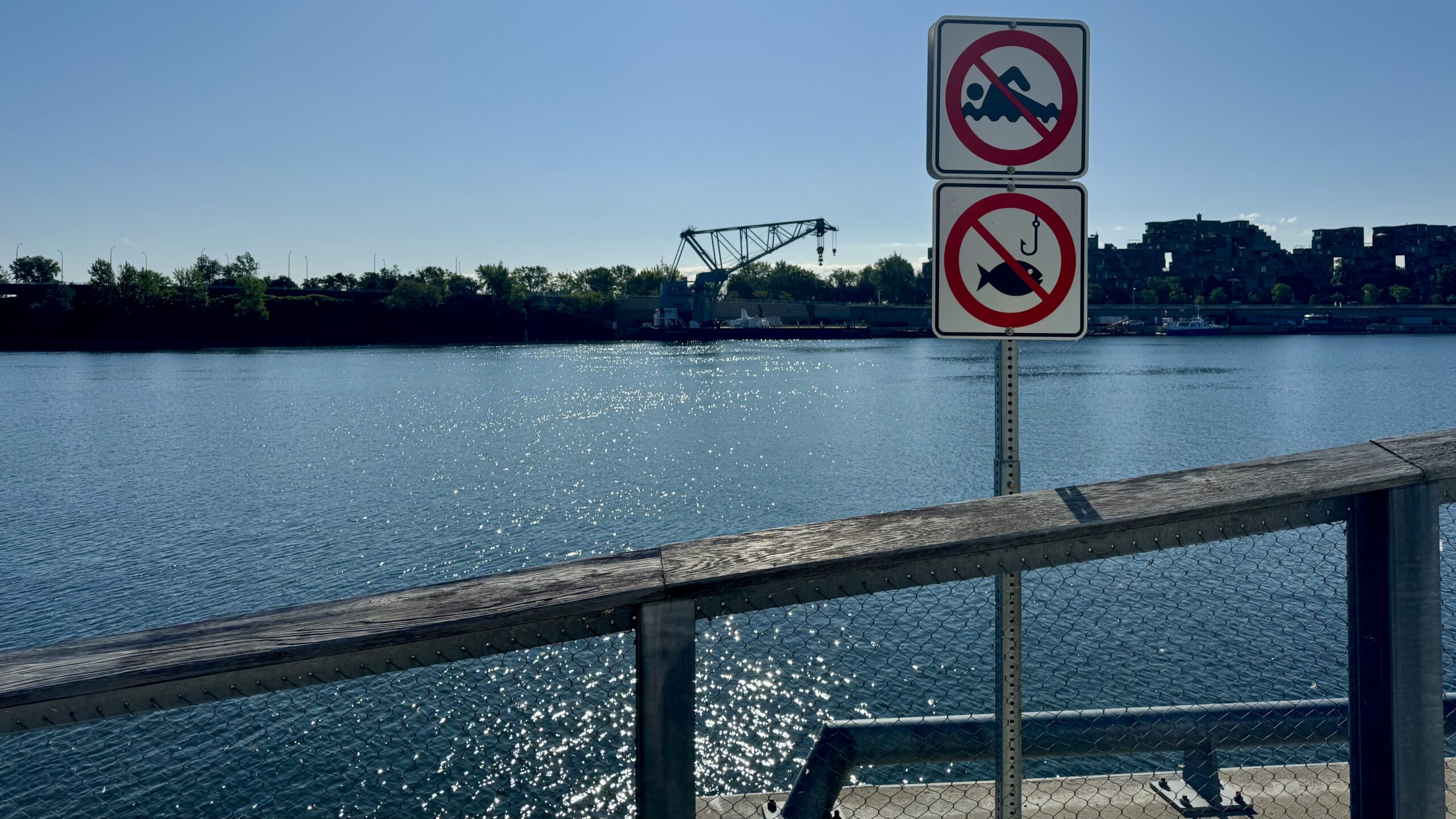
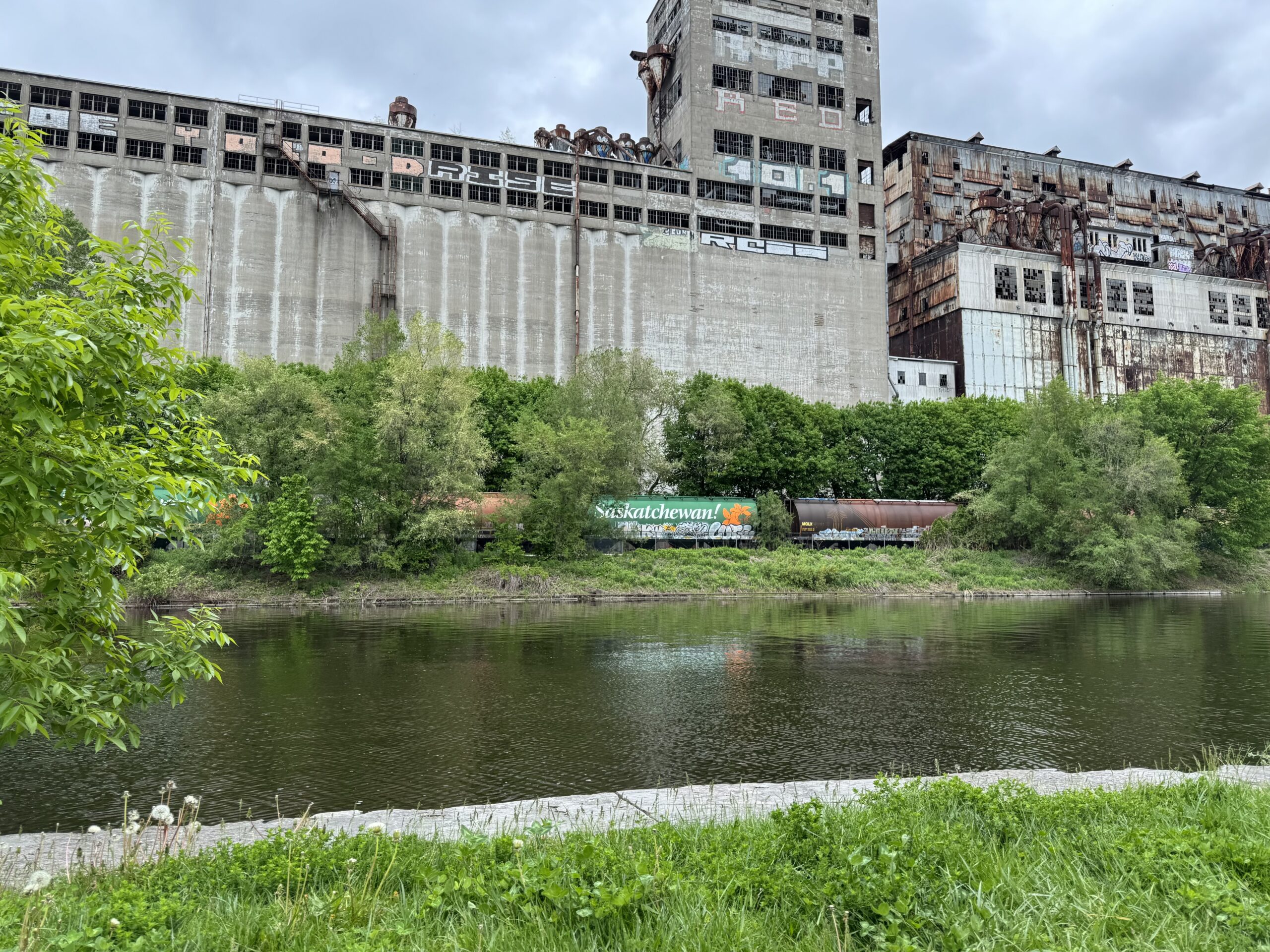
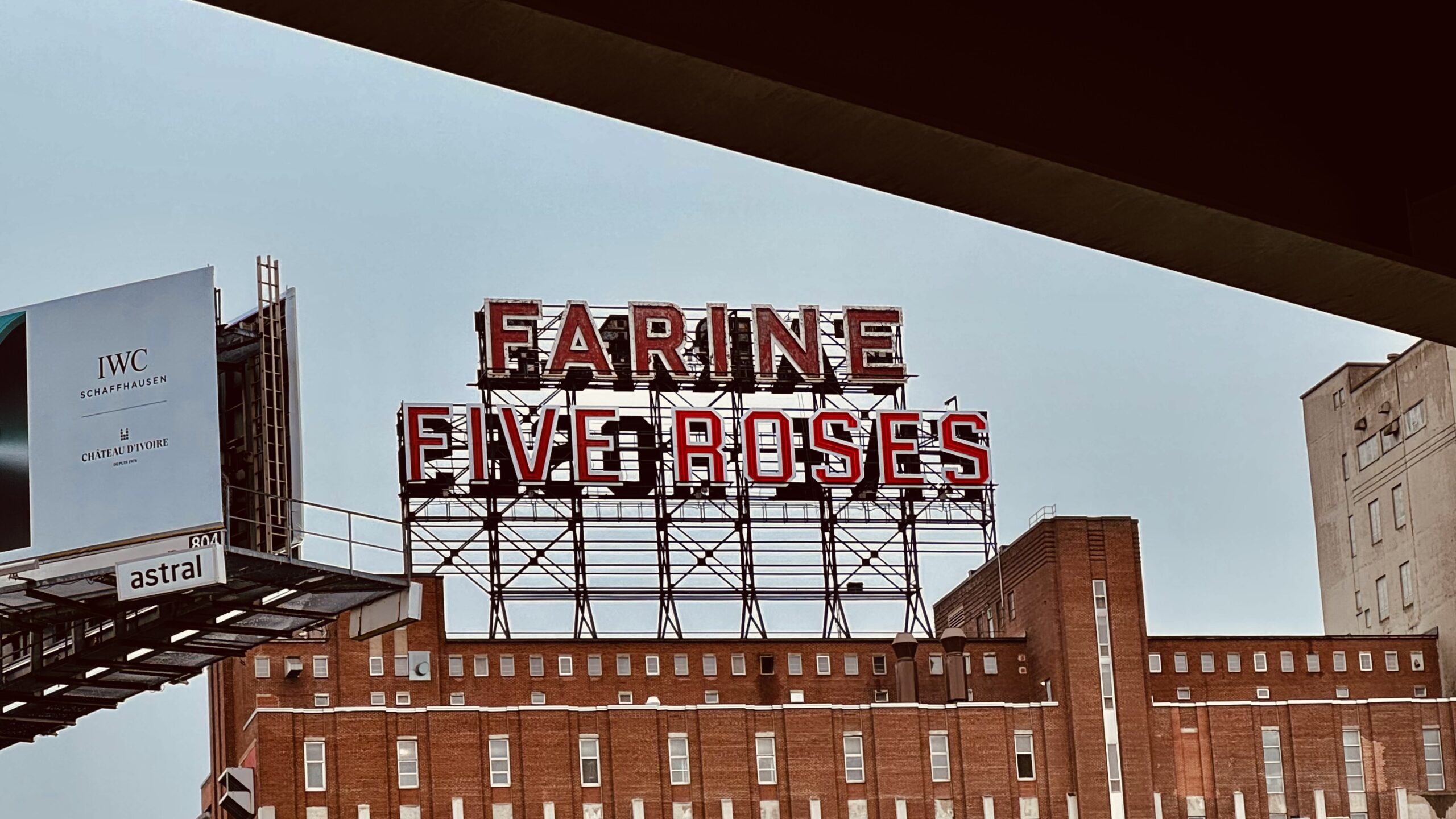
    Under the Bonaventure Expressway. The Five Roses sign at an angle I hadn’t expected from here. REM trains to my right, sliding past without sound from where I’m sitting. Water. I’m always near water these days, and I’m starting to think that’s not incidental.

    A bus passes overhead and the whole structure hums. Rain making texture over the basin, fine and persistent, the kind that doesn’t announce itself. Black railings, rusted, graffiti-covered, dripping. Lines of water just waiting to fall. Sand. One of those public workout structures no one is using at this time on a Saturday morning. A group of runners in high visibility spandex and shorts run down the bike path. The city in every direction, and Griffintown beyond it, for rent signs on every building.

    I’ve been coming to this city as someone who’s leaving. I didn’t notice until I sat down.


    I developed a habit, somewhere in the last year, of waiting for the role that already speaks my language. The one where the job posting uses words close enough to mine that I can step in without translation. I projected myself so completely into those futures that when the doors didn’t open, I had to grieve whole lives I had never lived. And then came the questions, quieter and more damaging than the disappointment itself: I thought I was made for this. I didn’t even get an interview. What do I do with that?

    Yesterday, I applied for more jobs than I had in all of last year. Something loosened. I sat with the grief and then I just started applying. Not waiting for the role that already recognizes me. Apply, and release. The worth of the work is established in other rooms, by other accountabilities. A search committee is not the final word on any of it.


    I’m finishing a PhD in fields being actively criminalized south of the border, at a political moment that has shifted so much since I started that some days it’s hard to remember what the urgency was supposed to look like from the outside. When I began there was appetite. Now the appetite has moved, or curdled, or gone underground, and I’m here with a dissertation about fugitive care and speculative health and Black queer survival, graduating into a structure that is rapidly deciding this work is a liability.

    And yet. The peer review. The publications. The editor’s face at the ball. The collaboration still coming. Something has expanded inside the work that I didn’t plan for. The quality of attention is different than it was three years ago. I can feel it when I write, the way a sentence finds its own weight now, the way I trust the observation to carry more than it used to. I didn’t manufacture that. It accumulated through drift, through coming back to the same water in different weather, through learning to let the body lead and follow after it with language.

    I can’t be expected to always produce from what I carry in my body. That wouldn’t be research. That would be extraction.

    I also deserve care.

    I also deserve care.


    Not to break the fourth wall or anything, but I keep thinking about these posts. How they might eventually compile into something. A monograph, maybe, or the evidence of one: a methodology demonstrated rather than argued, drift as a way of knowing, the fragment as form. What I’ve been building out here, in public, might already be the work. Not preparation for the work. The thing itself, accumulating. That feels important to say out loud, even just to myself, under the expressway, in the rain. And then an Amtrak train rolls backward across the bridge over Wellington, toward Gare centrale, and I think about Avery Gordon, about haunting, about what it means to walk grounds that announce their own history on interpretive signs beside empty lots.

    This is one of the birthplaces of industrialization in Canada, the signs say, and the land they mark is largely vacant. The apartments going up in Griffintown are full of people who arrived after whatever the land remembers. Irish famine migrants came through here in 1847 carrying typhus, tens of thousands of them, and the ones who didn’t survive were buried in mass graves not far from where I’m standing. The Black Rock near the water marks some of them. The neighbourhood that bore their labour and their dying was eventually abandoned, then razed, then rebranded as a market for luxury condos with exposed brick and river views. The exposed brick is original. I’m walking through it, making my own record, adding my body to the account.

    The running club has crossed to the other side of the canal. I don’t know when that happened.

    I want to stay in this city. I have wanted to stay. But I know what it means to be this particular person at this particular moment in this city’s politics, and that knowing sits in my chest differently than the wanting does. They are both true. They do not resolve each other.


    I don’t have a job. I’m tired. I said that in my previous post and it was real and it needed saying.

    And also: I’m not stuck. I have a place to stay, for a few months or longer if needed, with a friend I love. The flexibility I’ve been reading as precarity is also, just barely, freedom. The frantic searching, the plans that keep changing because they always do because that’s the nature of these structures, maybe that’s what has been keeping me half out the door. Engaging with the city as someone already in transit. Already gone.

    I think receiving the news by the canal on that day unbraced something in me. The body did the work and the mind caught up later, slow and a little embarrassed. Maybe this is the same thing. Maybe I need to let myself unbrace again: to be here, in Tiohtià:ke, under concrete, watching water. To hold the basin, the railings, the grey of the sky, without requiring any of it to resolve.

    Maybe when I stop the frantic searching, direction makes itself clear. It has before. I have evidence of that. I can use it.


    Pacing and waiting and unbracing at the Peel Basin. The rain drips and the texture changes. A REM train speeds back toward the mountain. The water waits.

    Maybe that’s enough. Maybe that was always enough.

    Fediverse Reactions
  • Eastward

    Eastward

    The ice is gone.

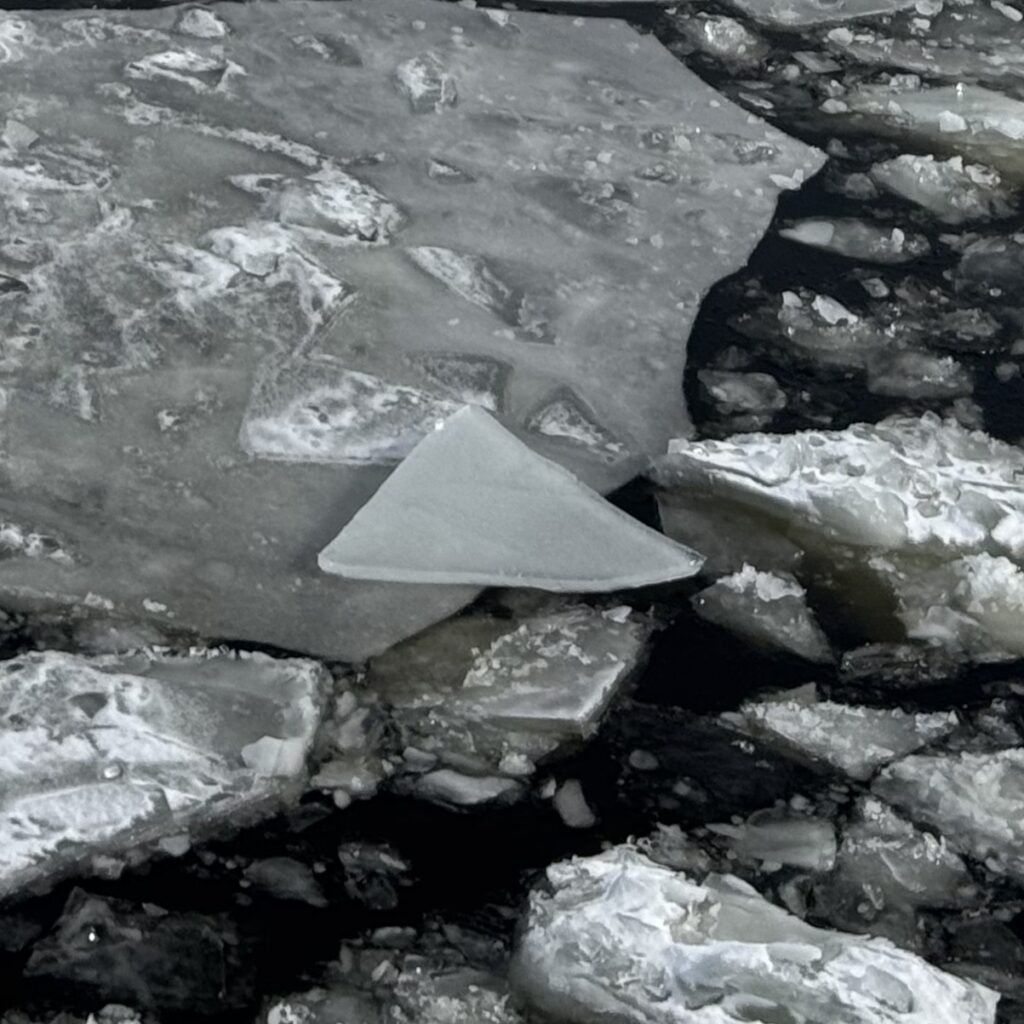
    I notice this before I’ve settled fully onto the bench, the oat milk moka still warm between my hands, the pines along the boardwalk doing their slow work in the wind. Habitat 67 sits in my peripheral vision the way it always does. The Jacques-Cartier Bridge. The amusement park still closed for the season, rides standing idle behind the fence. This is the same bench, the same eastward orientation I keep returning to without quite deciding to. The Grand Quai in late April looks like a different river than the one I’ve been sitting with all winter, and in some ways it is. What I’m looking at now is water that has finished its holding. The ice that was here, the particular piece I wrote about once, the one that had taken the shape of a perfect triangle and pointed east the day I submitted my application, is gone. The river took it. That’s what rivers do across a season, with what they’re given.

    I came back because the body knew to, before the rest of me had a reason.

    Yesterday the city was warm.

    I had finished a book on a terrasse on rue Saint-Paul, the last page coming the way last pages do when you’ve been living inside something long enough — not with surprise but with a recognition that the shape had completed itself. I sat with the last sentence for a moment before closing it, the way you sit with the last note of something before the room starts being a room again. Espresso. A crepe. The sun was doing what it had no business doing in the last days of April and rue Saint-Paul was receiving it without question, the old stone of the buildings holding the warmth differently than the glass towers do, softer, like the city remembering an older version of itself. People moved slowly. Faces turned up. I had nowhere to be and the body knew it and settled accordingly, shoulders dropping to a place they haven’t reached in months, the jaw unclenching, the particular luxury of a Tuesday that belongs entirely to itself.

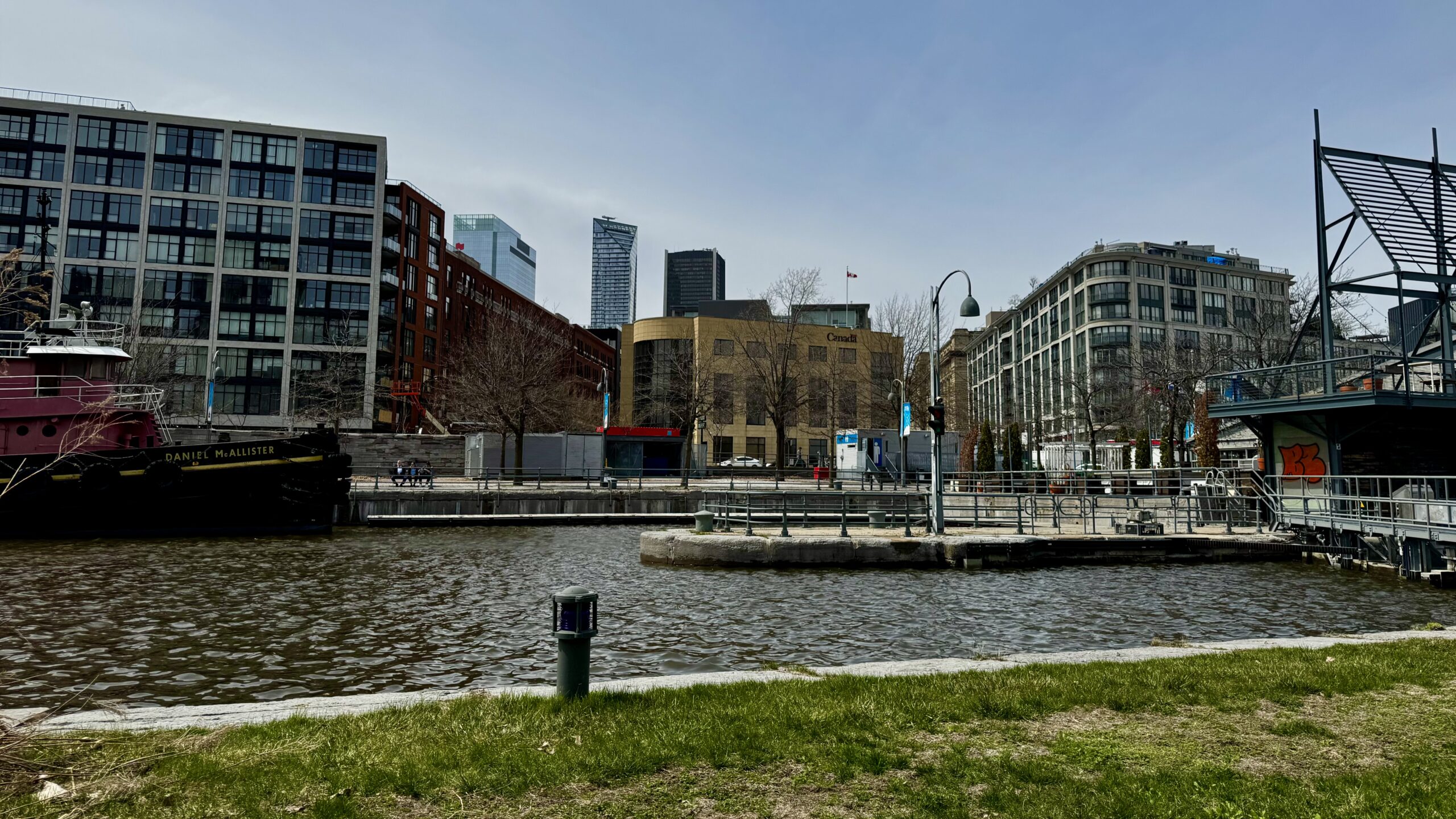
    I walked to the Lachine Canal after. The streets through the old port were still carrying the warmth, the light coming off the cobblestones at the angle it only reaches in spring, low and honeyed, the kind of light that makes the familiar look briefly precious. The Daniel McAllister was sitting in the locks the way it always sits, red and massive and indifferent to what the afternoon was doing around it. I found a patch of grass near the water, soft from the recent thaw, and lay down with my backpack as a pillow and let the sun press into my face and chest and the fronts of my hands. The body settled into the ground. The canal moved beside me with the particular quietness of still-cold water in a warm month. Somewhere across the water a bird was doing something persistent. I closed my eyes.

    The body was already somewhere it recognized. Water, the eastward pull, the quality of attention that arrives in me when I’ve been near this city’s waterways long enough to stop performing being near them. I didn’t know I had brought anything. I thought I was lying in the sun on a warm day with a finished book and nowhere to be. The email came into that. I stared at the water for a long time after. Not thinking. Not yet. The canal kept moving the way it had been moving before the email arrived, indifferent to the reordering that had just occurred inside my chest. The sun was still doing what it had been doing. The Daniel McAllister hadn’t moved. I lay there with the phone face down on the grass beside me and let the body do what it needed to do with the information before I asked it to do anything else.

    Not even an interview.

    I knew it before I opened the email. Had known something was coming since morning in the way you know certain things through the body before they arrive as language — a low settling, a particular quality of stillness that isn’t peace. I had been waiting eight weeks. The waiting had lived in my shoulders, in the bracing I’ve been writing about for months, the compression that doesn’t shift with rest or movement. And then the day had been so good. The book finished, the sun, the terrasse, the city briefly being the version of itself that makes you forget you know better. I think now that the body had been preparing the whole time, had been carrying the knowledge forward through the morning and into the afternoon, had found the water and lain down beside it because it knew what was coming and wanted to be somewhere it could receive it.

    Four days before this, I was at a ball.

    The editor of a collection on queering research methods was in the city — they had already read the chapter I submitted, the one that takes ballroom as its methodological site, had held the manuscript in their hands and followed the argument through — and it happened, the way things sometimes happen in this work, that there was a function that weekend. Le National was filling up as they arrived, the air carrying that particular charge a ballroom space holds before the first category is called, sweat and cologne and anticipation and the low thrum of a sound system that knows what it’s there for. This is my place. The place where my body remembers things about itself it forgets in other rooms.

    The commentator was electric that night. It’s the girls I see, it’s the girls I know, it’s the girls I LOVE! — the chant landing and lifting and landing again, the whole room carrying it forward without being asked, the way a room becomes a body when the conditions are right. For Bizarre and Face the effects came out, light and smoke and the particular theatre of a category that understands spectacle as argument, and the walkers moved through it like they had built the universe the effects were gesturing toward, because they had. Then the commentator called for the DJ to cut the beat. Someone deserved their flowers. The praise came slowly and specifically, the way real recognition does when it isn’t performed but meant. I turned to them and said: imagine what a moment like that does for your self image.

    They were watching the room the way you watch something you’ve read about but hadn’t yet felt in the body. And I was watching them watch it, and I was also just there, inside the thing my chapter is about, the thing I have been trying to describe in academic language for years, and for a few unrepeatable hours the distance between the researcher and the researched was not a methodological problem I was managing but simply gone. They saw the work in its own element. Saw what the work knows that the chapter can only point toward.

    The hiring committee reviewed my file and moved on without making contact.


    These are not the same kind of not-being-chosen and my body knows the difference. It also knows the longer record. The tissue that received the email yesterday has received other decisions, earlier ones, ones that arrived before I had language for what it meant to be assessed and found not quite right for the available position. The committee doesn’t know that. The file doesn’t carry it. But the body holds the full archive anyway, and what lands on it now lands on everything already stored there — every room that looked at what I was and made its calculation, every process that moved forward without me, every form of not-being-selected that taught me, before I had words for any of it, that my belonging somewhere was conditional on someone else’s decision. The hiring committee is not the first institution to review my file and conclude I wasn’t what they were looking for. The body has been here before.

    What I know is that my work circulates. It reaches into rooms before I do. The professor who was hired for the anti-colonial social work position I applied for once asked me to lecture in one of their courses, on anti-Blackness, because of the strength of what I had built. The editor came to the ball. The work is not invisible. What it is, is illegible to the institutions that would need to legibly credential it in order to shelter it. There is a difference between being seen and being chosen, and I have been living inside that difference long enough to name its specific texture — the way it sits in the chest distinct from ordinary disappointment, distinct from failure. This is not failure. It is something more precise and in some ways more exhausting than failure, because it requires knowing the value of what you’re holding while watching the institution decide it doesn’t know what to do with you.

    I have to pay my bills. I don’t have a job. In a few months the PhD will be finished and the structure it provided — the funding, the timeline, the container — will be gone, and the practice is already closed, and the position didn’t come, and I am sitting at the bottom of every scaffold at once. I know the work has value because I have watched it have value, repeatedly, in rooms that received it on its own terms. I am also scared in a way that doesn’t care what I know.

    A triangular piece of ice, pointing eastward, on the surface of the Saint Lawrence in late February.
    A triangular piece of ice, pointing eastward, on the surface of the Saint Lawrence in late February.

    I came back to the Grand Quai this morning because this is where I picked it up.

    Eight weeks ago there was ice here. A piece that had taken the shape of a perfect triangle, pointing east, and I had stood at this water and let that mean something on the day I submitted the application. I know what I felt standing here, the particular quality of a sign you don’t go looking for, the way the body receives it before the mind has decided whether to believe in that kind of thing. I let it mean something. I carried it forward through eight weeks of waiting, through the compression and the bracing and the not-knowing, and I brought the weight of it with me to the canal yesterday and it was still there when the email arrived.

    The ice is gone now. The river took it back sometime in the weeks I was waiting, dissolved it into current the way it dissolves everything it’s given across a season. I’m looking at open water. The same eastward orientation, the same bench, Habitat 67 still on the opposite shore, the boardwalk’s pines still swaying slowly in the wind. The place hasn’t changed. What it was holding is gone.

    I’ve been watching this stretch of water long enough to know what it looks like when it’s finished holding something. This is what it looks like.


    So I put it down.

    Not the work. Not the knowing. Not the particular exhaustion of being this person in this work at this moment. Those travel with me. What I’m putting down is the version of the future I had been carrying in my chest since January: the particular mornings I had been imagining, the quality of quiet in a small town, the body that might exist there, less braced, more available to itself. The version of myself that had a title and a campus and a room where the work could happen on its own terms. I had given that version a lot of grace. I had let it become specific. I had let myself want it.

    The ancestors came from the direction this water runs. The shard of ice that pointed east is already out there somewhere, dissolved into the Atlantic, returned to the water that carried my people. I’m not the first one to sit at this river and give something to the current. I won’t be the last.

    The trucks are still beeping in the distance. The pines are doing their slow work in the wind. Habitat 67 and Île-Sainte-Hélène and the Jacques-Cartier Bridge still sit in my peripheral vision, the amusement park still closed, the rides standing idle. The oat milk moka has gone cold in my hands. The sky is the particular grey of a day that isn’t going to change its mind.

    I’m still here. I’m still undone. The water already knows what to do with what I’ve brought it.

    Fediverse Reactions
  • What the Credential Requires

    What the Credential Requires

    The process is specific. A recognized bachelor’s or master’s in social work. More than 350 hours of supervised fieldwork. Registration with a provincial regulatory body. Annual renewal. Professional liability insurance. Continuing education requirements that must be documented and submitted on schedules the regulatory bodies determine. In most provinces, certain activities are reserved exclusively for licensed practitioners, creating legal perimeters around forms of assessment and intervention that can only be practised by those the provincial order has recognized. The details differ by jurisdiction. The logic is the same across all of them.

    The stated mandate of professional regulatory bodies is the protection of the public. The mechanism for that protection is the control of professional practice. Those two things are presented as the same project.

    They are not the same project.

    To require that care be delivered through a licensed practitioner is to require that it be delivered through a person the institution has recognized, trained, insured, and made accountable to the institution’s own standards. The supervised fieldwork hours are not hours of learning how to be in relation with people. They are hours during which the institution evaluates whether the candidate’s practice can be named in its terms. Regulatory bodies define supervision as a formal, continuous process of reflection that integrates the values of the profession. The profession’s values. Not the community’s. Not the client’s. Registration is not a recognition of competence. It is an entry into a register. The register is a list of people whose practice can be found, audited, disciplined, and withdrawn.

    This is not bureaucracy failing to do what it promised. This is bureaucracy doing exactly what it was built to do.

    To require that care be standardized, documented, and reproducible is to require that it be made available on institutional terms. The institution sets those terms in relation to its own interests, which are not the same as the interests of the people most likely to need care. The session note is not a record of what happened between two people. It is a translation of that encounter into language an insurer can evaluate, a court can subpoena, and a regulatory body can review in the event of a complaint. Every translation involves loss. The losses here are not random. What falls out of the session note is precisely what made the session matter: the quality of the silence, the shift that happened that neither person could have predicted, the particular texture of someone’s survival. What remains is the presenting problem, the intervention modality, the plan. The care gets documented. The care does not survive the documentation intact.

    This conversion is the point. The credential is not incidental to it. The credential is the mechanism through which it happens.

    Licensed practitioners gain access to something specific: legitimacy within systems that were not built for the people most likely to need care. The ability to bill insurers. To work within institutions. To produce assessments that carry weight with courts, hospitals, employers, child protection services. That weight is deputized. It flows from the same institutions whose ongoing function includes the surveillance, regulation, and management of the communities those assessments are most often used against. To enter those institutions as a credentialed participant is to enter on their terms. The terms of participation are established before anyone arrives, regardless of what they intended when they applied.

    People still choose this. The choice is made, and the harms that follow from it belong to the people who enact them. The structure does not absorb individual accountability. What the structure does is make certain harms legible and defensible. It provides frameworks within which things can be done to clients that would, outside the professional context, be recognizable as violation. It provides language that converts those violations into documentation of professional practice. It provides discipline processes better designed to protect institutional authority than the person who was harmed. The credential is not incidental to this protection. It is how the protection works.

    The work that happened in this practice was real. Something moved between people in those rooms that was not reducible to the structure surrounding it. The quality of attention that accumulates in sustained therapeutic work, the particular thing that becomes possible when someone knows they will not have to start over next week, when the person across from them has been paying attention long enough to notice what has shifted and what has not. That is real in the way that relation is real. It happened, and the fact that it happened inside a structure organized to convert it into auditable service does not unmake it.

    What it does is make the contradiction sharp enough to become impossible to continue carrying.

    The practice is closing because continuing it would mean continuing to agree, in practice if not in belief, to what the credential requires. To keep routing genuine care through a structure whose function is to make it legible on institutional terms. To keep producing documentation that serves systems organized against the people sitting across from this desk.

    The care does not close with it. The obligation that came from being trusted with people’s survival does not dissolve when the annual registrations do. What those who were in those rooms carried here mattered, and it was received as mattering, fully, outside any framework the regulatory bodies provided for receiving it. That does not change. What ends is the agreement to deliver care through a mechanism that extracts something from it on the way, that requires it to pass through institutional translation before it can count as real.

    That extraction was always happening. This is what it cost.
  • The Body as First Register

    The Body as First Register

    My body has been the first place where things gather. A pressure sits in my back—a low bracing that has begun to feel structural, the kind of tightness that doesn’t shift with stretching or rest. It moves without ever fully leaving. Some days it settles between my shoulder blades; other days it spreads into my neck or rests heavily in my hips. The sensation is diffuse, hard to locate, yet immediately recognizable once it arrives. Everything feels slightly drawn inward, as if the body has deliberately narrowed its range.

    The ache doesn’t spike. It remains steady, more background than signal. Muscles stay engaged even at rest, as if something still needs holding and hasn’t yet been set down. There’s a readiness in it, though nothing immediate is forming. I notice it most when I slow down. Sitting brings it into focus. Pausing sharpens it. When movement stops, the pressure moves forward and the body organizes itself around it. The sensation doesn’t ask for attention; it simply refuses to disappear.

    Living this way has altered how I understand what’s been happening. The body feels occupied, involved in something ongoing—not injured, not malfunctioning, but engaged in sustained effort without a visible task. This is the place I’m writing from: a body compressed and alert at once, held together without a complete story yet for what that holding is preparing for.

    A Quiet Overwhelm

    Over time, it became clear this wasn’t random. The body was registering something before I had language for it. The tension built gradually, without a single moment to point to, accumulating over weeks and months and settling quietly rather than arriving all at once. What surprised me was the form this overwhelm took. There was little panic—no rush, no spike, no outward agitation. Instead, things slowed. Initiation became difficult. Small tasks grew dense. The body responded by becoming still, narrowing its range, holding position.

    I would sit in front of my laptop with the lid open, the screen dimming itself while I stayed there, hands resting on the keyboard without moving.

    This kind of stillness is easy to misread. From the outside, it can look like avoidance or delay. From the inside, it feels like containment. Energy pulls inward. Movement pauses. Output reduces. The system stays intact by limiting how much it releases at once. I began to recognize the pattern as it repeated. Each time something shifted—each time another layer of uncertainty entered—the body tightened slightly, not as protest but as stabilization, a way of staying upright, of keeping things from spilling.

    There’s information in that response. An early warning that doesn’t speak in sentences. The body adjusts first, marking change through sensation and letting the holding register before the story catches up. Over time, this read less like pathology and more like pattern recognition: the body noticing accumulation and responding in the only way it knows how—by slowing down and staying in place until the next shape becomes clearer.

    Loosening Frames

    At the same time, several forms of scaffolding have been loosening—not abruptly, but through gradual unfastening, felt before it was fully understood. The PhD is coming to an end, along with a structure that has carried weight for a long time. Its timelines and rhythms organized my days and sense of direction. As that frame thins, the body seems to notice first. The absence registers as space, and space carries its own pressure.

    The lease is ending too. The rooms I move through each day no longer feel fixed. Space has become provisional. The body responds by staying alert, keeping itself gathered. Even familiar corners take on a different texture when they’re no longer guaranteed. Beyond that, the next steps remain unformed. There isn’t a clear container waiting to take shape. This doesn’t arrive as a dramatic void. It appears as a background hum that keeps the body from fully settling.

    All of this unfolds within a broader atmosphere that never quite recedes: political instability, escalating violence, systems coming undone. These conditions don’t remain outside personal life. They enter the body like weather, a constant barometric shift that makes everything heavier and harder to place. None of these shifts stands alone. They layer, overlap, and accumulate. The body holds the sum of them, adjusting quietly as the ground shifts underneath.

    Where Things Stall

    As these layers built, freeze began to appear in ordinary places, in small procedural moments. Initiating simple tasks took longer. Messages lingered unopened or half-drafted. Anything requiring sequencing or follow-through felt dense. Often the body reacted before thought finished forming. A screen would open and something in my back would tighten. An inbox would load and the body would brace. Lists and calendars brought on a full-body pause—immediate and physical—as if the system had already shifted gears.

    Mail collected on the edge of the table, unopened, the same envelopes moved from one corner to another over several days.

    Stillness became common. Movement narrowed. Energy pulled inward. Attention shortened. The effort to move from one small step to the next increased. The body organized itself around slowing down, especially where accumulation was highest—administrative tasks, ongoing correspondence, anything requiring continuity across time. Engagement reduced. Output thinned.

    Seen closely, this freeze carried information. It mapped density. It marked where too many threads were being held at once. The system paused to stay intact until pressure eased enough to allow movement again. Over time, the stillness took on shape. It wasn’t empty. It occupied space. Muscles gathered around it. The pause held.

    What Can Be Held

    When several structures loosened at once, the body narrowed its field. When demands accumulated without clear edges, movement reduced. Fewer motions. Fewer decisions. The body stayed closer to itself. Engagement continued in some places and not others. Tasks requiring sustained attention stretched the system thin. The body responded by slowing initiation and working in short intervals.

    The pause had boundaries. It wasn’t total or random. It clustered around sequences that extended forward without a clear end. The body adjusted its pace to what it could hold without spilling.

    The narrowing had a threshold
    Enough.

    The Form No Longer Fits

    The decision to end my private practice arrived through the body. It showed up as contraction, as effort that no longer redistributed. The work remained meaningful. The form no longer fit. Capacity and structure stopped aligning in a way the body could negotiate. I noticed it in the preparation it took, the recovery afterward, the back tightening before language did. The work demanded continuity across time.

    And something in me would not go there again—not cleanly, not fully, not without paying a cost I could already feel.

    The body responded by pulling inward, signaling a limit that didn’t soften with reassurance.

    The decision wasn’t dramatic. It settled slowly through repetition. Each return to the question carried the same physical answer. There is grief here, low and steady—a grief for a form that once held something real, for relationships shaped through care, for a version of myself that lived inside that structure.

    Responsibility remains. It appears in careful timing, in communication, in how endings are handled. The body still holds that weight even as the boundary is set. Ending the practice feels less like rupture than closure—a form laid down because it no longer matches what the body can sustain. Care remains. The limit remains. Both are held.

    Work Beneath Stillness

    What began to make sense was the compression itself—the narrowing, the inward pull, the body staying gathered. There’s logic in that compression. When a form is no longer viable, work turns inward. Systems reorganize without consulting the calendar. Energy reroutes. What once moved outward turns back toward center.

    This phase doesn’t look spacious or restorative. It’s dense, pressurized, full of friction. Beneath the surface, the body works continuously—redistributing weight, testing configurations not yet named. From the outside, little changes. Movement slows. Output thins. Inside, everything remains active.

    There’s no timeline attached to this work. The body stays in it as long as needed, reorganizing around what can be sustained next. This isn’t rest. It’s internal labor.

    Care Finds Its Scale

    As this reorganization continues, my relationship to care and obligation shifts. The body responds differently to what asks for attention. Some requests land cleanly. Others stall before reaching language. Care feels more precise now. It gathers around what can be met without strain. Long arcs of responsibility register as heavier as they extend forward.

    Obligation has slowed. Urgency has thickened rather than intensified. Timing and pacing matter more. Commitment hasn’t disappeared; it has cooled. Energy collects before release. Attention stays closer to center, conserving what hasn’t finished forming.

    This doesn’t feel like withdrawal. It feels like recalibration. Care finding a shape that matches capacity. Responsibility adjusting its scale. The body setting a tempo it can maintain. What I’m allowing arrives quietly: accompaniment without translation, delay without panic, unfinishedness without collapse. Messages wait. Tasks unfold over days. Threads remain open.

    I’m allowing the body to set the pace, letting sensation determine when to move and when to stay still. I watch where effort gathers and where it drains. These allowances aren’t generous; they’re necessary. They create just enough room for the system to keep reorganizing without tearing.

    Orientation

    Where I am now feels specific. The compression remains. The pressure hasn’t lifted. The body stays alert, organized around holding. At the same time, there’s less confusion inside it. The sensations are familiar enough to be read. I move more slowly—not hesitantly, but attentively.

    I walk the same short route most mornings, past the same trees and parked cars, noticing how often I stop without realizing it.

    There’s steadiness here—not ease, but orientation. The body recognizes itself in this compression. It knows how to stay upright. I’m not waiting for resolution or trying to see past this moment. The present has texture: dense, close, manageable in small spans. The body stays with what’s here.

    This feels like a place rather than a passage.

    Arrival, for now, looks like remaining intact—staying in relationship with the body as it does this work, letting sensation lead without rushing it into meaning. Integrity lives here: in listening and pacing, in allowing form to change without demanding a finished outline. What comes next will arrive when it’s ready. For now, the work is contained in this holding. The body stays steady and attentive until the shape ahead becomes clearer.