Tag: Palestine

  • Consequence as Weather

    Consequence as Weather

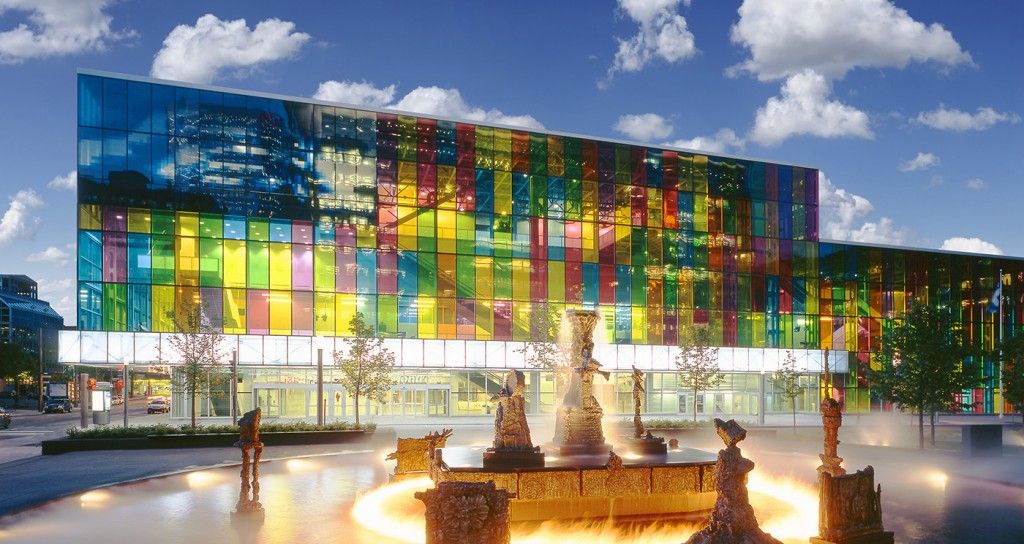
    The coffee shop near the Palais des congrès is already full of Liberal Party of Canada convention delegates when I join the line outside. Cop cars are parked down the street. Inside, every table has a staffer. Suits. Baseball caps. #LIB2026 lanyards. Louboutins under a table where someone’s set a Prada bag on the chair beside her. Laptop messenger bags open across tables the staff need to turn. Pins with Mark Carney’s face. Meticulously curled hair. Khakis. The particular self-assurance of people who’ve decided their presence anywhere is appropriate. Then one woman moving through the room with an umbrella from the Fairmont, the red of her dress the party colour, coordinated, intentional. She passes a barista without looking at her and something tightens in my chest that’s been tightening for days.

    I’m wearing a keffiyeh and I notice the moment they notice it. Something shifts in the room that nobody names. A delegate near the door clocks it and looks away with a speed that’s its own kind of statement. I’m used to being read in spaces like this, used to the particular attention that Black presence draws in rooms that have decided they’re for everyone. The keffiyeh adds a layer. They know it and I know they know it and we all sit with our coffees pretending the room isn’t doing what the room is doing.

    The REDress Project places empty red dresses in public spaces to hold the shape of the women who are gone, the ones this government decided this week, this specific week, don’t require sustained investigation or resources. The woman with the Fairmont umbrella didn’t choose red for that reason. The colour was assigned. Coordinated. By a party that also welcomed Marilyn Gladu across the floor, a woman whose votes against queer and trans people are part of the parliamentary record, and called it coalition. This is the party that marches in Pride parades. That points to marriage equality as proof of its character. I’m a queer person in this room and I’ve known for a long time that the shelter had conditions. My body doesn’t receive Gladu as shock. It receives her as confirmation, one more piece of evidence landing on top of everything already stored, every previous moment the walls showed how thin they were. That’s how it accumulates. Weight settling into the chest and the shoulders and the jaw, invisible from the outside, carried forward into every room where you’re told to be grateful for the protection. The woman in red moves through the coffee shop. The barista clears a table. None of them look up.

    This is my coffee shop. At the counter there’s a different kind of exchange available, the kind between people who’ve been showing up for each other across enough ordinary mornings that the terms are established. We don’t have to say much. I make a joke. He laughs in a way that’s also an exhale. We talk briefly about what it costs to serve people who treat you like infrastructure, who order without eye contact, who leave without acknowledgment. Nobody says Liberal Party. Nobody has to. The room keeps doing what it’s doing around us.

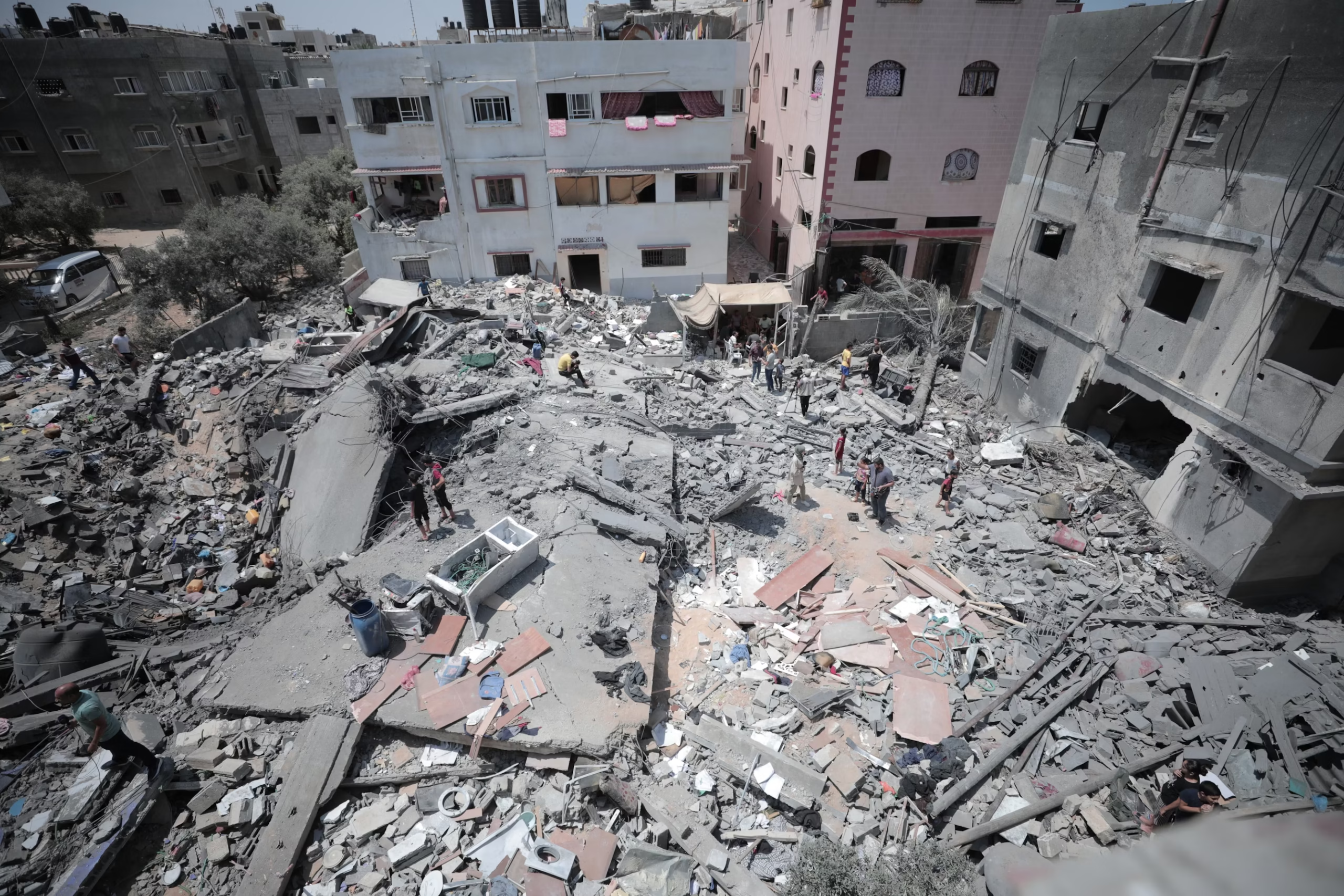
    Three tables away a delegate checks his phone. This government is complicit in a genocide and has spent considerable resources avoiding that word, and cut funding for investigations into missing and murdered Indigenous women, girls, and Two-Spirit people this week, and has used every available tool to avoid the connection between those two sentences. The funding, the votes, the abstentions, the phrasing carefully chosen to avoid the words that would require action. Somewhere a family is in rubble. Somewhere a child is being pulled from concrete. Somewhere a woman is missing and the file’s been defunded. Here we are, here I am, here they are, in Tiohtià:ke on a blustery Thursday morning. The woman in red passes the window on her way to the Palais. The Fairmont umbrella catches the light.

    I finish my coffee. Close my book. The room’s still full when I push through the door and turn south toward the Palais des congrès, toward the metro, past the cop cars still parked where I left them.

    Around the Palais the police are everywhere. The apparatus arranged in a perimeter around the people who command it, who fund it, who’ve always been the reason it exists in the form it does. The woman in red moves through that perimeter without breaking stride. I’ve never been the person that apparatus was arranged to protect. The people I love have never been that person. The people whose deaths we mark and carry forward, the ones the red was supposed to hold, whose files were defunded this week, the ones in rubble whose names this government will not say, have never been that person. The police are at the Palais des congrès because the people inside it put them there.

    What stays in my body is the knowledge that nothing I feel or say or write will reach these people in any way that costs them anything. They’ll leave the Palais and return to their lives and the decisions they make will continue to land on the same bodies they’ve always landed on and they’ll sleep. That’s what impunity actually is. The ability to move through the world without your actions ever returning to your body as consequence. I’ve spent my whole life in a body where consequence is the weather. Where what I do and how I move and what I wear and who I am carries risk in rooms like this one. They’ve spent their whole lives in the other kind of body. The kind the police are arranged to protect. The kind that gets to feel frustrated about service at a coffee shop without that frustration being a threat assessment. We’re in the same city on the same Thursday morning and we’re not in the same world.

    These systems don’t hold forever and the people inside them know it even when they perform certainty. I’ve watched enough of these rooms to recognize the particular discomfort of people who’ve learned to read threat and have started to feel it coming from directions they didn’t expect. It’s in the way the delegate clocked my keffiyeh and looked away. It’s in the way entitlement requires an audience that keeps agreeing to the premise, and that audience is getting smaller and louder about its refusal. The collapse of these systems will be disorderly and the people with the least protection will absorb the most of that disorder on the way down. That’s not a prediction. That’s the pattern, repeating. The keffiyeh. The barista who laughed in a way that was also an exhale. The agreement these people depend on is breaking and they can feel it.

    The most honest thing that happened this morning was a small pastry set beside a coffee without a word, between two people the room wasn’t watching. I’ve been thinking about that on the walk down here, about what it means that the thing that held the most required the least. The police were outside the coffee shop when I left. They’re all the way down the street and around the Palais des congrès, the same apparatus, just more of it, arranged in a perimeter around people who’ve never had to think about what a small thing costs or what it holds. I’m still thinking about the pastry.​​​​​​​​​​​​​​​​

    Fediverse Reactions
  • There Is No Word for This Grief: On Gaza, Famine, and the World That Watches

    There Is No Word for This Grief: On Gaza, Famine, and the World That Watches

    I wasn’t supposed to be writing this.

    I’m supposed to be writing a comprehensive exam about temporality and health. About how Black queer people live and care for one another in timeframes not designed for our survival. I’m supposed to be providing therapy tomorrow—offering calm, presence, holding—for clients navigating their own overwhelm, grief, burnout. I’m supposed to be finishing a manuscript, drafting another talk, prepping for the next ball.

    But there is a genocide happening in Gaza.

    And I am broken.

    And that’s not what this is about. But it’s also what everything is about.

    Because I don’t know how to move through this world anymore.

    Not in a poetic way. Not in a metaphor. I mean literally. My body doesn’t know what to do with itself. I sit still and I shake. I eat and feel nauseous. I sleep and wake up in a sweat. I walk outside into wildfire smoke so thick that Tiohtià:ke now has the worst air quality in the world—and even still, I know I’m breathing freer than a child in Rafah.

    And what do you even do with that kind of knowing?

    There is a level 5 famine in Gaza.The highest designation possible.
    Thousands of children are already dead from starvation.
    More will die in the coming days.

    And the food is already there.
    Just metres away.
    Across the border.
    In trucks.
    In planes.
    In warehouses.

    Blocked.
    By policy.
    By intention.
    By design.

    This is not a crisis. This is not a natural disaster. This is not an unfortunate byproduct of war. This is a settler colonial genocide. A calculated campaign of extermination. Ethnic cleansing disguised as self-defence. Starvation weaponized. Infrastructure targeted. Grief made endless.

    This is the logic of Zionism.
    This is the logic of empire.
    This is what it means to disappear a people in real time.

    And the world watches.
    Scrolls.
    Shrugs.
    Argues.
    Donates, maybe.
    Then forgets again.

    Because forgetting is the luxury of the unaffected.

    And if you know what it is to be Black, to be queer, to be Indigenous, to be trans, to be displaced, to be criminalized, to be border-crossed or borderless, then you already know this truth: the world is not neutral.

    Not when it comes to genocide.
    Not when it comes to who gets to live.
    Not when it comes to who the world calls human.

    What’s happening in Gaza isn’t unimaginable.
    It’s entirely imaginable.
    That’s what makes it unbearable.

    This is what genocide looks like in the age of livestreams.
    This is what settler colonialism looks like when the camera’s always on.
    This is what fascism looks like when it doesn’t need to hide anymore.
    This is what it means to beg for mercy and be called a terrorist.
    This is what it means to scream for food and be met with silence.
    This is what it means when a child’s life is worth less than the narrative.

    And here we are. Watching.
    In real time.
    As Gaza bleeds.

    I’m not here to offer hope.
    Not the kind you can package.
    Not the kind you can sell.

    Because if you’re watching this and still talking about “both sides,”
    If you’re more outraged by broken windows than by bombed hospitals,
    If your solidarity is contingent on respectability, strategy, or PR optics,
    If your grief only activates when white bodies are harmed,
    Then your humanity is not mine.

    And I am not interested in convincing anyone that Palestinians deserve to live.

    Because life is not earned.
    Freedom is not a prize.
    Liberation is not a matter of debate.

    Palestinians do not need your approval to resist.
    They do not need your permission to mourn.
    They do not need to be perfect victims in order to be spared.

    They are not being starved because of Hamas.
    They are not being bombed because they resist.
    They are being exterminated because they exist.
    Because they are Indigenous.
    Because they are still there.
    Because they refuse to disappear.

    And I am wrecked by this.

    Not just as a witness, but as someone who knows what it means to be told that your life is too complicated to matter.
    Who knows what it means to scream into silence.
    To live in a body that the state treats as collateral.
    To walk through a world that sees your death as routine.

    But this isn’t about me.

    It’s about a father holding the body of his child and saying I’m sorry I couldn’t protect you.
    It’s about people breaking apart stale bread to share with twenty others.
    It’s about the doctor who keeps treating the wounded in the rubble of a bombed out hospital.

    It’s about the poets still writing.
    The dancers still dancing.
    The children still drawing keys to homes that no longer exist.
    The elders still planting seeds in soil they know they may not survive to harvest.

    This isn’t resilience.
    This is refusal.

    This isn’t optimism.
    This is survival strategy.

    This isn’t a tragedy.
    It’s a crime.
    An atrocity.
    A catastrophe authored by cowards in suits and suits in tanks and tanks in children’s bedrooms.

    And still, somehow, there is singing.
    Still, somehow, there is prayer.
    Still, somehow, there is resistance.

    Still, somehow, they live.

    And I want you to understand what it means to keep living in the middle of a genocide.
    To not just breathe—but to love.
    To not just exist—but to refuse.
    To not just survive—but to fight.

    So no, I don’t have the words.
    I have this grief lodged in my throat like shrapnel.
    I have these tears that feel like they betray the scale of the loss.
    I have this ache in my chest from trying to hold space for others while knowing the world is falling apart.
    I have the unbearable knowing that every second I spend writing this, someone else is dying.

    And still—I write.
    Because silence is complicity.
    Because bearing witness is not enough, but it is necessary.

    Because abolition means all cages.
    Because solidarity means now, not after.

    Because Palestine is not a symbol—it’s a place, a people, a love, a struggle that stretches across oceans and generations.
    Because to be Black and queer and abolitionist and breathing in this world is to take a side.

    And I will say it again and again and again, even if my voice shakes:

    From the river to the sea, Palestine will be free.

    And may we live long enough to see that day.

    And may we never forget what we did—and didn’t—do until then.

  • The Wrong Kind of Grief

    The Wrong Kind of Grief

    Who’s Allowed to Mourn in Public—and Who’s Not

    It was quiet at first. Just a few of us lying on the cold concrete outside of McGill University. Keffiyehs folded. Bodies arranged—not for spectacle, but for mourning.
    The die-in wasn’t meant to go viral. It was meant to say what the system refuses to name:
    Gaza is being erased.
    And health workers know what genocide looks like.

    I remember the weight of my own breath as I lay there.
    Not heavy. Not performative. Just present.

    Someone walked by and snapped a photo without asking. Another didn’t stop at all.
    When we stood up, nothing had changed. Not on the street. Not in the news.
    But something had settled in my chest. Something that hasn’t left.

    Because we weren’t only laying our bodies down for Gaza.
    We were laying down with the knowledge that our grief is never allowed to be grief.

    Not when it’s Black.
    Not when it’s queer.
    Not when it’s tied to Palestine, or trans lives, or state violence.

    That kind of grief doesn’t get candles.
    It gets cops.
    It doesn’t get statements.
    It gets silence.
    And sometimes, if we’re not careful, it gets turned inward—
    Treated like something to suppress. Something to explain away.
    Too emotional. Too disruptive.
    The wrong kind of grief.

    Black Grief as Threat

    Black grief has never been read as grief.
    It’s read as aggression.
    As instability.
    As a problem to manage.

    A vigil for a Black life becomes a police incident.
    A protest gets framed as a riot.
    A mother weeps on camera, and the story pivots to property damage.

    This isn’t new.
    But that doesn’t make it any less violent.

    Even in so-called progressive spaces—health orgs, queer collectives, activist networks—there are unwritten rules:
    Don’t cry too hard.
    Don’t speak too plainly.
    Don’t say something that makes people uncomfortable.

    I’ve been in those rooms.
    Told I was “too emotional” for naming what hurt.
    Asked to “come back when calmer” as if grief needed to be reasonable to be real.

    But Black grief doesn’t belong to institutions.
    It doesn’t need to be tidy.
    It doesn’t need to be polite.
    It shows up where it’s needed:
    In kitchens. In bathrooms. In the street. In the quiet moment after the meeting ends.

    And maybe that’s what makes it dangerous.
    That we still feel.
    That we still care.
    That we refuse to forget.

    Because in a world trying to erase us, grieving is a form of resistance.

    Palestinian Grief and the Politics of Denial

    If Black grief is read as a threat, Palestinian grief is denied altogether.
    Or worse—criminalized.

    In recent months, we’ve watched mourning itself become a battleground.
    Vigils banned.
    Flags confiscated.
    Photos of murdered children labeled “too political.”
    The dead rendered offensive.
    The living forbidden to name them.

    The message is clear:
    You can grieve, but not like that.
    Not too visibly.
    Not too loudly.
    Not in a way that disrupts the narrative.

    The same governments funding the bombs demand silence about the bodies.

    But Palestinian grief refuses to stay quiet.
    It pours into streets, onto murals, through chants.
    It insists on being seen—even when the world tries to look away.

    And that insistence resonates.
    Because for many of us—Black, queer, displaced—it feels familiar.
    We know what it means to mourn in public and be told it’s too much.
    We know what it means to be asked to tone it down, make it palatable, put it away.

    Still, we mourn.
    Together.
    In public.
    Without apology.

    Queer Mourning and Rituals of Refusal

    Queer people have always built our own ways to mourn.
    No one gave us space.
    So we carved it out ourselves.

    In clubs. In alleyways. In bedrooms and chat threads.
    We’ve lit candles in parking lots.
    Laid flowers on steps where no police ever came.
    Held vigils that no news crew covered.
    Carried names no one else bothered to say.

    This is part of our lineage:
    ACT UP die-ins.
    Ashes delivered to government steps.
    Protests that doubled as funerals.
    Grief that refused to be silent.

    That legacy is still with us.
    Every time a trans name is whispered online because no outlet printed it.
    Every time someone cries in a bathroom after reading a headline and someone else holds them.

    Queer mourning doesn’t always look like mourning.
    Sometimes it’s awkward.
    Sometimes it’s loud.
    Sometimes it’s just showing up.

    But it’s always a refusal.
    A refusal to grieve quietly.
    A refusal to perform respectability.
    A refusal to act like this world hasn’t taken too much from us.

    This grief is a kind of care.
    Not the kind taught in workshops.
    The kind that says:
    “I see you. I’ll carry this with you. Even if no one else will.”

    Grief That Doesn’t Fit

    I’ve been in spaces where I knew I wasn’t allowed to grieve.
    Not really.
    I could speak, maybe. But not feel too much.
    Not shake the frame.
    Not say something that might get labeled “too intense.”

    Sometimes, the silencing is subtle.
    Someone avoids eye contact.
    A conversation gets politely redirected.
    A room falls quiet—not in respect, but discomfort.

    I remember being told I was ben énervé for naming the violence of Black bodies on slides, with no disaggregated data, no context, no care.
    Just images.
    Just performance.

    I wasn’t angry.
    I was grieving.
    Grieving the way our lives get reduced to symbols.
    Grieving the absence of real recognition.
    Even that was too much.

    Most of us learn to shrink our grief until it fits.
    Until it sounds strategic.
    Until it’s digestible.

    And when it doesn’t shrink, we’re called unstable.
    Disruptive.
    Unprofessional.

    But grief isn’t supposed to make people comfortable.
    It isn’t a moment.
    It’s a condition.

    It lingers in the breath, in the body, in the way your shoulders won’t release even when the meeting ends.

    Some days, I carry it like fog.
    Some days, like glass.
    Some days, it doesn’t arrive until I’ve taken off the mask and closed the door behind me.

    But I no longer apologize for it.
    Because I’ve learned something simple:
    Grief is proof that something hasn’t been taken from me.
    Not yet.

    Toward Abolitionist Mourning

    We need to stop pretending grief only matters when it’s quiet, clean, or backed by institutions.

    We need to stop asking the systems that harm us to validate the losses they cause.

    Abolitionist mourning doesn’t wait for permission.
    It doesn’t ask for policy.
    It doesn’t make pain legible to power.

    It mourns on its own terms—messy, collective, unsanctioned.
    It stays with what hurts.
    It lets the wound speak.

    We’ve always known how to do this.

    Black and Indigenous people have mourned in ways the state can’t hold.
    Palestinians have carried memory through exile and massacre.
    Trans people create rituals that no church would sanctify.

    We don’t need more professionalization of pain.
    We need more space for its truth.
    More honesty.
    More refusal.

    Because grief is not what breaks us.
    What breaks us is having nowhere to put it.
    And what repairs us—if anything does—
    is knowing we don’t have to carry it alone.

    We’re Still Mourning

    We don’t need the state’s recognition to make our grief real.
    We don’t need institutions to validate what our bodies already know.
    Our mourning isn’t excessive.
    It isn’t disruptive.
    It isn’t unprofessional.

    It’s memory.
    It’s survival.
    It’s care.

    And it’s not going anywhere.

    If the world refuses to hold our grief,
    then we will keep finding other ways to carry it.
    We will light candles where they say we can’t.
    We will chant the names they refuse to speak.
    We will gather in the cracks and hold each other there.

    Our grief isn’t the problem.
    The problem is a world that only makes space for it once we’re gone.

    We’re still here.
    We’re still mourning.
    And we’re not asking for permission.

    Fediverse Reactions
  • Urgent Call for Dalhousie to Divest from Companies Complicit in Israeli Occupation

    Urgent Call for Dalhousie to Divest from Companies Complicit in Israeli Occupation

    Dear Members of the Dalhousie University Board of Governors,

    As a current doctoral student at Dalhousie University, I feel compelled to speak out on an issue that goes to the very heart of our shared values as an academic institution. The university’s investments in companies complicit in the illegal Israeli occupation of Palestine contradict its commitments to equity, justice, and human dignity. This is not just a financial matter—it is a moral crisis. Dalhousie’s continued financial ties to these companies make it complicit in ongoing violence that the United Nations has clearly identified as having genocidal intent.

    The recent report  by UN Special Rapporteur Francesca Albanese provides chilling details about the systematic destruction of Palestinian life in Gaza. The report describes the forced displacement, mass killings, and deliberate targeting of civilians as actions that amount to genocide. This is not a distant issue; it is one that our university directly engages with through its investments in companies that profit from illegal settlements, home demolitions, and militarized violence. These financial choices have real, devastating consequences for millions of Palestinians.

    Dalhousie’s history shows us what happens when institutions prioritize profit over people. The Lord Dalhousie Panel Report laid bare the university’s deep entanglements with anti-Black racism, slavery, and colonial exploitation. While efforts have been made to address that legacy, the university’s investments in companies enabling the destruction of Palestine perpetuate the same systems of violence. These decisions undermine everything Dalhousie claims to stand for.

    As a student at this university, I had felt proud to be part of a community that values equity and reconciliation. But those values must be reflected in our actions, and over the three years I have spent at Dal to date, what I have seen is a lot of lip service to equity and social justice without doing the very difficult work needed to actively undermine the legitimacy of the systems that reinforce oppression. Let me be clear: investing in companies complicit in genocide is antithetical to everything our community profess to believe. We cannot look away while lives are being destroyed, communities erased, and an entire people subjected to state-organized oppression. Neutrality in the face of such violence is complicity.

    My work as a scholar focuses on how systemic violence fractures communities, identities, and lives. I know deeply how interconnected these struggles are. The settler-colonial violence Palestinians and Lebanese populations face today is not unlike the legacies of anti-Blackness and Indigenous dispossession that continue to shape Canada and Nova Scotia. These systems of oppression are linked, and our response to one reflects our commitments to all.

    Dalhousie has an opportunity to lead—not with words, but with action. Divestment is not a radical demand; it is a necessary step toward aligning the university’s financial practices with its values. By divesting, Dalhousie can affirm its commitment to justice and human dignity, standing in solidarity with those resisting systemic violence. This is not just about Palestine—it is about Dalhousie’s role in shaping a more just world.

    I urge you to act now. Divest from all companies complicit in the illegal Israeli occupation. To delay is to allow our resources to continue funding violence and destruction. The choice before you is clear: to perpetuate harm or to stand on the side of justice.

    This is a defining moment for our university. Let Dalhousie be remembered as an institution that chose accountability and courage in the face of genocide. Let it be a leader in the fight for equity, dignity, and human rights.

    In solidarity,

    Vincent Mousseau, MSc RSW
    PhD Student
    Faculty of Health, Dalhousie University