Tag: Colonialism

  • Consequence as Weather

    Consequence as Weather

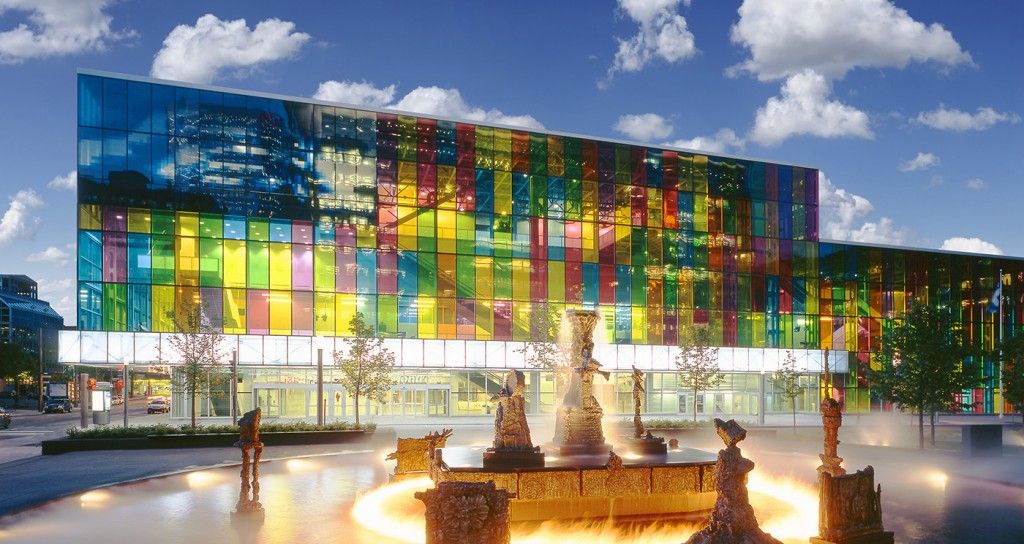
    The coffee shop near the Palais des congrès is already full of Liberal Party of Canada convention delegates when I join the line outside. Cop cars are parked down the street. Inside, every table has a staffer. Suits. Baseball caps. #LIB2026 lanyards. Louboutins under a table where someone’s set a Prada bag on the chair beside her. Laptop messenger bags open across tables the staff need to turn. Pins with Mark Carney’s face. Meticulously curled hair. Khakis. The particular self-assurance of people who’ve decided their presence anywhere is appropriate. Then one woman moving through the room with an umbrella from the Fairmont, the red of her dress the party colour, coordinated, intentional. She passes a barista without looking at her and something tightens in my chest that’s been tightening for days.

    I’m wearing a keffiyeh and I notice the moment they notice it. Something shifts in the room that nobody names. A delegate near the door clocks it and looks away with a speed that’s its own kind of statement. I’m used to being read in spaces like this, used to the particular attention that Black presence draws in rooms that have decided they’re for everyone. The keffiyeh adds a layer. They know it and I know they know it and we all sit with our coffees pretending the room isn’t doing what the room is doing.

    The REDress Project places empty red dresses in public spaces to hold the shape of the women who are gone, the ones this government decided this week, this specific week, don’t require sustained investigation or resources. The woman with the Fairmont umbrella didn’t choose red for that reason. The colour was assigned. Coordinated. By a party that also welcomed Marilyn Gladu across the floor, a woman whose votes against queer and trans people are part of the parliamentary record, and called it coalition. This is the party that marches in Pride parades. That points to marriage equality as proof of its character. I’m a queer person in this room and I’ve known for a long time that the shelter had conditions. My body doesn’t receive Gladu as shock. It receives her as confirmation, one more piece of evidence landing on top of everything already stored, every previous moment the walls showed how thin they were. That’s how it accumulates. Weight settling into the chest and the shoulders and the jaw, invisible from the outside, carried forward into every room where you’re told to be grateful for the protection. The woman in red moves through the coffee shop. The barista clears a table. None of them look up.

    This is my coffee shop. At the counter there’s a different kind of exchange available, the kind between people who’ve been showing up for each other across enough ordinary mornings that the terms are established. We don’t have to say much. I make a joke. He laughs in a way that’s also an exhale. We talk briefly about what it costs to serve people who treat you like infrastructure, who order without eye contact, who leave without acknowledgment. Nobody says Liberal Party. Nobody has to. The room keeps doing what it’s doing around us.

    Three tables away a delegate checks his phone. This government is complicit in a genocide and has spent considerable resources avoiding that word, and cut funding for investigations into missing and murdered Indigenous women, girls, and Two-Spirit people this week, and has used every available tool to avoid the connection between those two sentences. The funding, the votes, the abstentions, the phrasing carefully chosen to avoid the words that would require action. Somewhere a family is in rubble. Somewhere a child is being pulled from concrete. Somewhere a woman is missing and the file’s been defunded. Here we are, here I am, here they are, in Tiohtià:ke on a blustery Thursday morning. The woman in red passes the window on her way to the Palais. The Fairmont umbrella catches the light.

    I finish my coffee. Close my book. The room’s still full when I push through the door and turn south toward the Palais des congrès, toward the metro, past the cop cars still parked where I left them.

    Around the Palais the police are everywhere. The apparatus arranged in a perimeter around the people who command it, who fund it, who’ve always been the reason it exists in the form it does. The woman in red moves through that perimeter without breaking stride. I’ve never been the person that apparatus was arranged to protect. The people I love have never been that person. The people whose deaths we mark and carry forward, the ones the red was supposed to hold, whose files were defunded this week, the ones in rubble whose names this government will not say, have never been that person. The police are at the Palais des congrès because the people inside it put them there.

    What stays in my body is the knowledge that nothing I feel or say or write will reach these people in any way that costs them anything. They’ll leave the Palais and return to their lives and the decisions they make will continue to land on the same bodies they’ve always landed on and they’ll sleep. That’s what impunity actually is. The ability to move through the world without your actions ever returning to your body as consequence. I’ve spent my whole life in a body where consequence is the weather. Where what I do and how I move and what I wear and who I am carries risk in rooms like this one. They’ve spent their whole lives in the other kind of body. The kind the police are arranged to protect. The kind that gets to feel frustrated about service at a coffee shop without that frustration being a threat assessment. We’re in the same city on the same Thursday morning and we’re not in the same world.

    These systems don’t hold forever and the people inside them know it even when they perform certainty. I’ve watched enough of these rooms to recognize the particular discomfort of people who’ve learned to read threat and have started to feel it coming from directions they didn’t expect. It’s in the way the delegate clocked my keffiyeh and looked away. It’s in the way entitlement requires an audience that keeps agreeing to the premise, and that audience is getting smaller and louder about its refusal. The collapse of these systems will be disorderly and the people with the least protection will absorb the most of that disorder on the way down. That’s not a prediction. That’s the pattern, repeating. The keffiyeh. The barista who laughed in a way that was also an exhale. The agreement these people depend on is breaking and they can feel it.

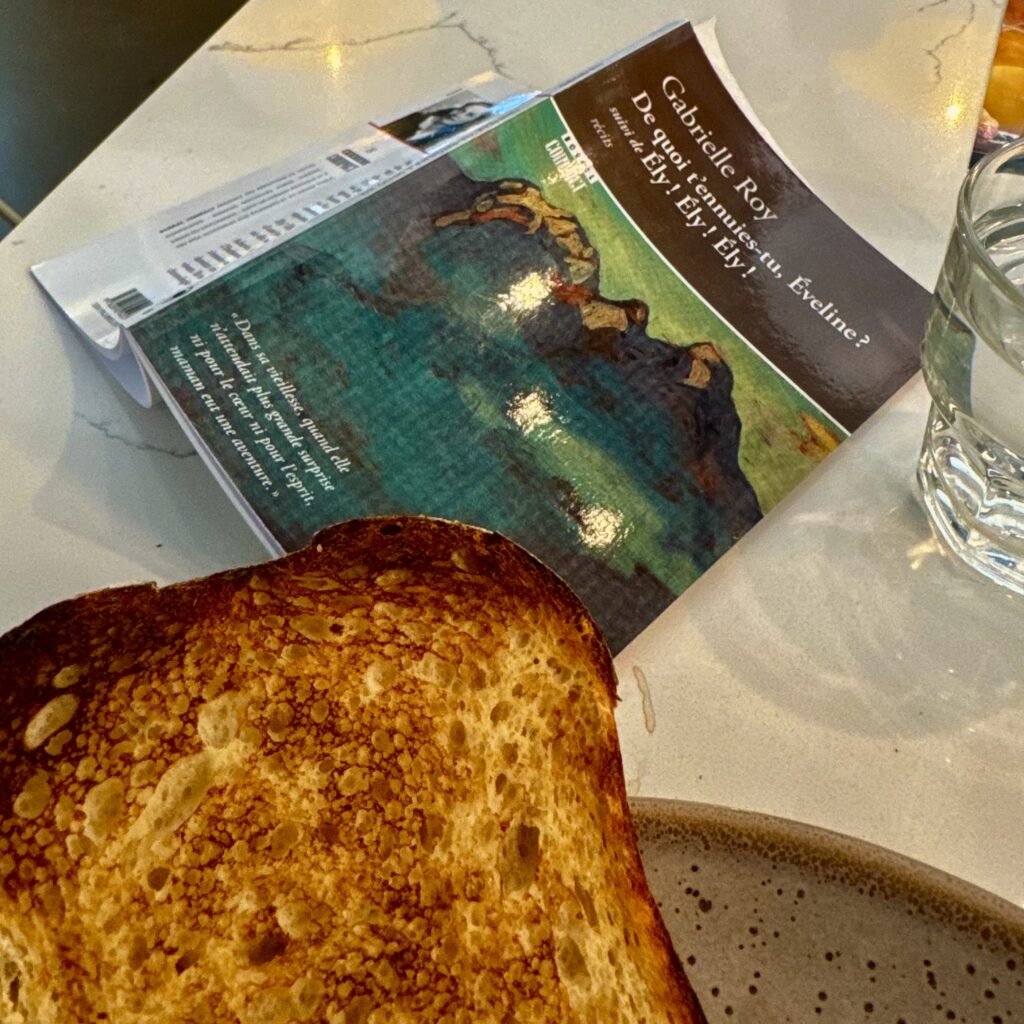
    The most honest thing that happened this morning was a small pastry set beside a coffee without a word, between two people the room wasn’t watching. I’ve been thinking about that on the walk down here, about what it means that the thing that held the most required the least. The police were outside the coffee shop when I left. They’re all the way down the street and around the Palais des congrès, the same apparatus, just more of it, arranged in a perimeter around people who’ve never had to think about what a small thing costs or what it holds. I’m still thinking about the pastry.​​​​​​​​​​​​​​​​

    Fediverse Reactions
  • Structures of Warmth and Violence

    Structures of Warmth and Violence

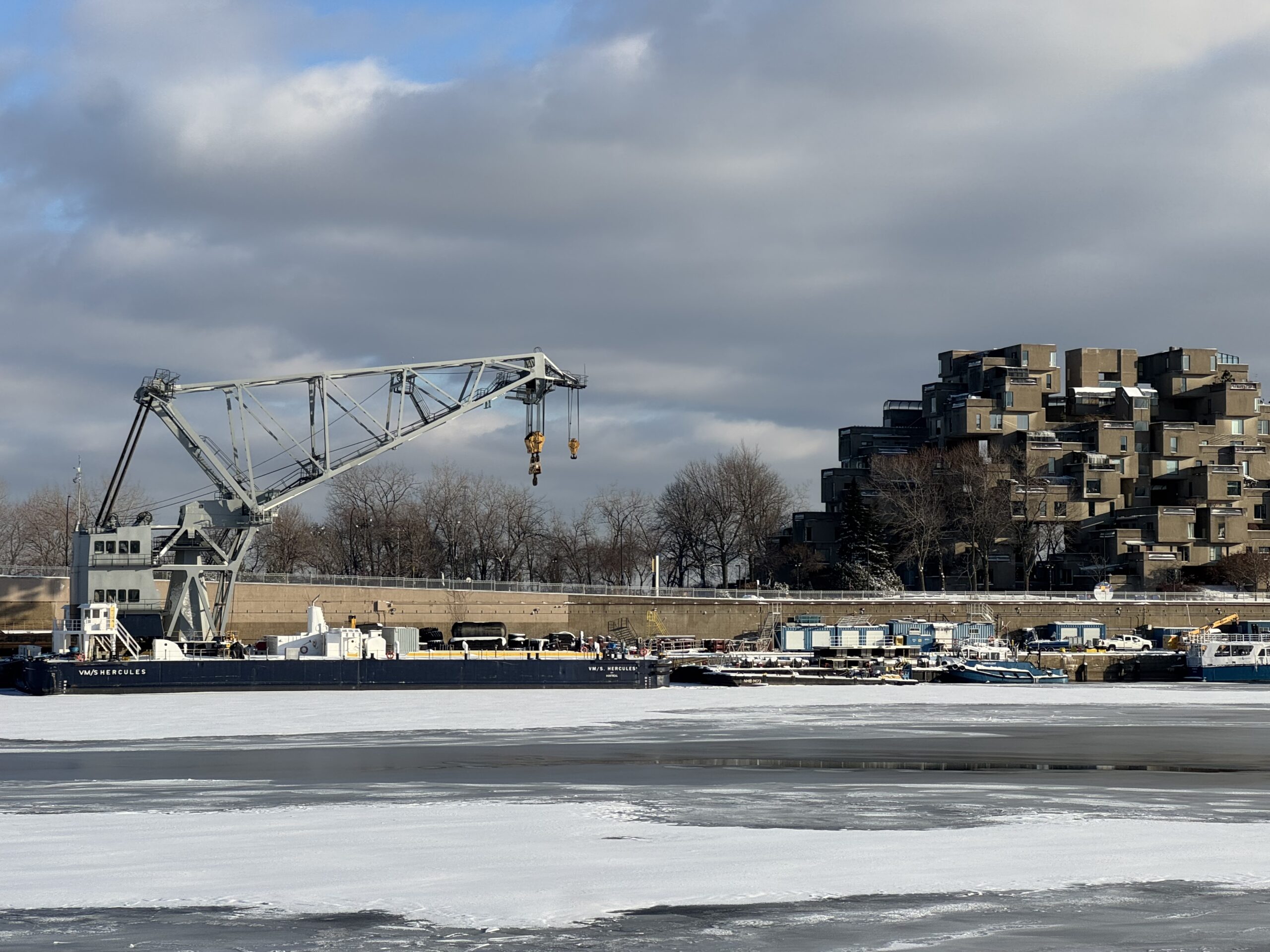
    The sun is warm on my face at the port, and I don’t trust it.
    Midwinter light has no business feeling this gentle.
    The river is frozen hard enough to refuse reflection, to hold its surface without depth.
    Ice tightens everything into place.
    And still, the sun presses against my skin, insistent, intimate, as if it has selected me for a comfort it has not offered the water.

    The warmth settles along my cheekbone, my forehead, the bridge of my nose.
    It feels careful.
    Conditional.
    The kind of warmth that arrives without consequence.

    Below me, the St. Lawrence stays sealed.
    Nothing loosens.
    Nothing yields.

    The body receives what the structure does not.

    I stand longer than I need to. The warmth encourages this. It invites cooperation. I find myself adjusting my posture to keep it where it is, then stopping mid-movement. The river does not respond. Frozen water thickens time, holds things mid-instruction.

    The river has lived many lives. Long before it was drawn into colonial routes, it moved according to rhythms that did not answer to ledger or law. Those rhythms were narrowed, redirected, pressed into service.

    The river was not born into circulation, but it was made to sustain it. Even frozen, that demand remains legible. I feel it in the way the streets pull away from the water, organized and expectant.

    Montréal learned early how to organize violence without spectacle.
    Enslavement here did not require plantations.
    It required houses.
    Parishes.
    Courtrooms.
    Contracts folded small enough to disappear into pockets.

    The river anchored this order without needing to carry every body directly. It stabilized the circulation that made enslavement repeatable inland. Wealth accumulated. Authority settled. Black life moved through kitchens, sacristies, wills, and back rooms—measured, assigned, transferred at the scale of the household.

    I leave the port and begin walking. The sun follows in fragments now, slipping between buildings, touching my face, then withdrawing. My hands stay numb inside my gloves. My feet register the cold through stone and pavement.

    As the river slips out of sight, it does not recede. Its work continues elsewhere—through inheritance records, baptismal registers, domestic routines. Violence did not need the port to remain present. It lived closer than that.

    Warmth keeps insisting. My thoughts turn to fire.

    In 1734, fire tore through Montréal and forced exposure. It moved through homes and businesses, through the interiors where enslaved Black and Indigenous people laboured without legal standing. The fire did not invent violence. It illuminated what the city already contained.

    Marie-Joseph Angélique was accused of setting that fire.
    The archive does not offer certainty.
    It offers procedure.

    She was enslaved.
    She was imprisoned.
    She was interrogated.
    She was tortured.
    She was sentenced.
    She was hanged.

    Fire moved quickly.
    Judgement did, too.

    Walking now, the sun returns as the street opens. It warms my face without softening anything else. I let it stay. Heat has always been read carefully here—allowed when it behaves, named dangerous when it does not.

    The records remain.
    The scaffold remains in description.
    The crowd remains as fact.

    In New France, the work of execution was frequently assigned to enslaved Black men. Settlers refused the role. The state solved the problem by purchasing someone into it. One of them, Mathieu Léveillé, was held in bondage and forced to perform executions for years. The archive places him as the one who likely carried out Angélique’s hanging. It tells us something else, too: that the colony routinely conscripted Black life to enact its most visible violence.

    This fact does not resolve anything.
    It deepens the fracture.

    The executioner’s body was also owned, unfree, positioned to absorb the consequence of an order that required intimacy rather than distance. The rope passed through Black hands—rough hemp against skin just as unfree—because the colony needed it to.

    Angélique’s execution did not interrupt slavery in Montréal.
    It clarified the terms.
    It demonstrated consequence.
    It absorbed the fire into governance.

    Ice forms differently than fire spreads.
    Slowly.
    Quietly.
    Layer by layer.

    By the time I drift back up to Vieux-Montréal, the river is elsewhere, but its cold has stayed with me. I turn towards Place d’Armes without ceremony. The square does not announce itself as a site of death. It behaves like stone and space. People pass through. Traffic moves nearby.

    This is likely where Angélique was hanged.

    This knowledge reaches the body first. The chest tightens. The jaw sets. There is no shift in the square to mark this recognition. The sun touches my face once more, briefly, as if insisting on its neutrality. Nearby, a busker’s rendition of “My Heart Will Go On” bounces off the buildings, unembarrassed, continuous. The warmth does not belong to the place. It belongs to the moment, and the moment does not care where it happens.

    Execution is cold work.
    So is administration.
    So is forgetting.

    I keep walking.

    The warmth thins. Cold resumes its full instruction. 

    By the time I reach home, the sun feels distant, almost unreal. But it stays the way certain facts stay—undeniable, insufficient, instructive. The river remains sealed. The square remains where it is. The archive remains incomplete and operative.

    Nothing has been redeemed.
    Nothing has been resolved.

    What has happened is simpler and harder:
    fire, ice, sun, and walking have entered the same field of attention, and my body has been asked to hold them together without explanation.

    That is part of the afterlife too.

  • There Is No Word for This Grief: On Gaza, Famine, and the World That Watches

    There Is No Word for This Grief: On Gaza, Famine, and the World That Watches

    I wasn’t supposed to be writing this.

    I’m supposed to be writing a comprehensive exam about temporality and health. About how Black queer people live and care for one another in timeframes not designed for our survival. I’m supposed to be providing therapy tomorrow—offering calm, presence, holding—for clients navigating their own overwhelm, grief, burnout. I’m supposed to be finishing a manuscript, drafting another talk, prepping for the next ball.

    But there is a genocide happening in Gaza.

    And I am broken.

    And that’s not what this is about. But it’s also what everything is about.

    Because I don’t know how to move through this world anymore.

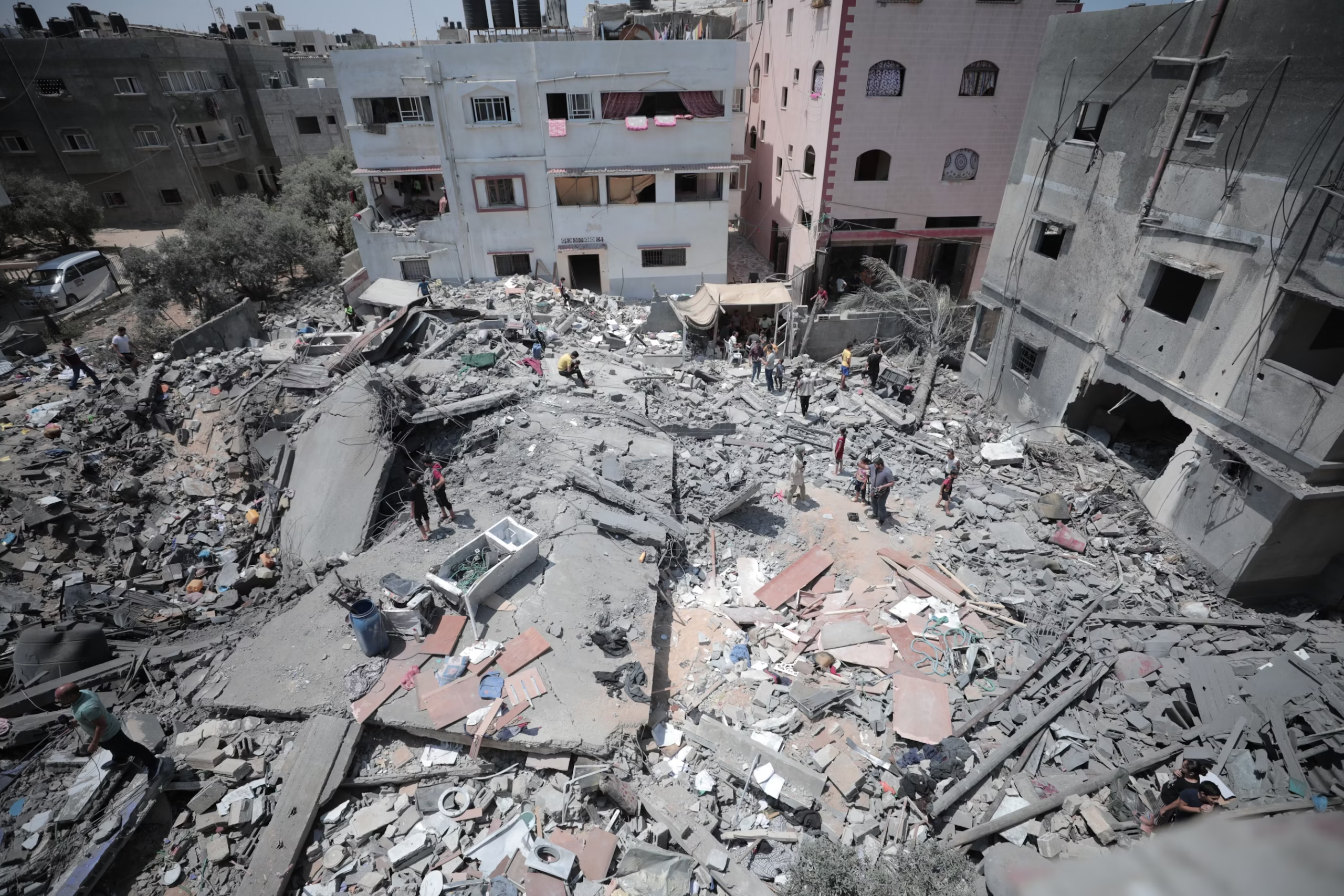
    Not in a poetic way. Not in a metaphor. I mean literally. My body doesn’t know what to do with itself. I sit still and I shake. I eat and feel nauseous. I sleep and wake up in a sweat. I walk outside into wildfire smoke so thick that Tiohtià:ke now has the worst air quality in the world—and even still, I know I’m breathing freer than a child in Rafah.

    And what do you even do with that kind of knowing?

    There is a level 5 famine in Gaza.The highest designation possible.
    Thousands of children are already dead from starvation.
    More will die in the coming days.

    And the food is already there.
    Just metres away.
    Across the border.
    In trucks.
    In planes.
    In warehouses.

    Blocked.
    By policy.
    By intention.
    By design.

    This is not a crisis. This is not a natural disaster. This is not an unfortunate byproduct of war. This is a settler colonial genocide. A calculated campaign of extermination. Ethnic cleansing disguised as self-defence. Starvation weaponized. Infrastructure targeted. Grief made endless.

    This is the logic of Zionism.
    This is the logic of empire.
    This is what it means to disappear a people in real time.

    And the world watches.
    Scrolls.
    Shrugs.
    Argues.
    Donates, maybe.
    Then forgets again.

    Because forgetting is the luxury of the unaffected.

    And if you know what it is to be Black, to be queer, to be Indigenous, to be trans, to be displaced, to be criminalized, to be border-crossed or borderless, then you already know this truth: the world is not neutral.

    Not when it comes to genocide.
    Not when it comes to who gets to live.
    Not when it comes to who the world calls human.

    What’s happening in Gaza isn’t unimaginable.
    It’s entirely imaginable.
    That’s what makes it unbearable.

    This is what genocide looks like in the age of livestreams.
    This is what settler colonialism looks like when the camera’s always on.
    This is what fascism looks like when it doesn’t need to hide anymore.
    This is what it means to beg for mercy and be called a terrorist.
    This is what it means to scream for food and be met with silence.
    This is what it means when a child’s life is worth less than the narrative.

    And here we are. Watching.
    In real time.
    As Gaza bleeds.

    I’m not here to offer hope.
    Not the kind you can package.
    Not the kind you can sell.

    Because if you’re watching this and still talking about “both sides,”
    If you’re more outraged by broken windows than by bombed hospitals,
    If your solidarity is contingent on respectability, strategy, or PR optics,
    If your grief only activates when white bodies are harmed,
    Then your humanity is not mine.

    And I am not interested in convincing anyone that Palestinians deserve to live.

    Because life is not earned.
    Freedom is not a prize.
    Liberation is not a matter of debate.

    Palestinians do not need your approval to resist.
    They do not need your permission to mourn.
    They do not need to be perfect victims in order to be spared.

    They are not being starved because of Hamas.
    They are not being bombed because they resist.
    They are being exterminated because they exist.
    Because they are Indigenous.
    Because they are still there.
    Because they refuse to disappear.

    And I am wrecked by this.

    Not just as a witness, but as someone who knows what it means to be told that your life is too complicated to matter.
    Who knows what it means to scream into silence.
    To live in a body that the state treats as collateral.
    To walk through a world that sees your death as routine.

    But this isn’t about me.

    It’s about a father holding the body of his child and saying I’m sorry I couldn’t protect you.
    It’s about people breaking apart stale bread to share with twenty others.
    It’s about the doctor who keeps treating the wounded in the rubble of a bombed out hospital.

    It’s about the poets still writing.
    The dancers still dancing.
    The children still drawing keys to homes that no longer exist.
    The elders still planting seeds in soil they know they may not survive to harvest.

    This isn’t resilience.
    This is refusal.

    This isn’t optimism.
    This is survival strategy.

    This isn’t a tragedy.
    It’s a crime.
    An atrocity.
    A catastrophe authored by cowards in suits and suits in tanks and tanks in children’s bedrooms.

    And still, somehow, there is singing.
    Still, somehow, there is prayer.
    Still, somehow, there is resistance.

    Still, somehow, they live.

    And I want you to understand what it means to keep living in the middle of a genocide.
    To not just breathe—but to love.
    To not just exist—but to refuse.
    To not just survive—but to fight.

    So no, I don’t have the words.
    I have this grief lodged in my throat like shrapnel.
    I have these tears that feel like they betray the scale of the loss.
    I have this ache in my chest from trying to hold space for others while knowing the world is falling apart.
    I have the unbearable knowing that every second I spend writing this, someone else is dying.

    And still—I write.
    Because silence is complicity.
    Because bearing witness is not enough, but it is necessary.

    Because abolition means all cages.
    Because solidarity means now, not after.

    Because Palestine is not a symbol—it’s a place, a people, a love, a struggle that stretches across oceans and generations.
    Because to be Black and queer and abolitionist and breathing in this world is to take a side.

    And I will say it again and again and again, even if my voice shakes:

    From the river to the sea, Palestine will be free.

    And may we live long enough to see that day.

    And may we never forget what we did—and didn’t—do until then.

  • Independence Fantasies, Colonial Truths

    Independence Fantasies, Colonial Truths

    Alberta wants to leave. Again. And this time, it’s louder than usual.

    Calls for Western separatism—what some are now trying to brand as a serious referendum campaign—are gaining traction. Politicians are testing the waters. The Premier hasn’t ruled it out. And, predictably, they’re invoking Quebec’s sovereignty movements as a model.

    But let me be clear from the outset: I’m not defending Canada. I’m not clinging to the federation. I don’t believe states are worth saving—not this one, not any of them. I’m not interested in sovereignty narratives that just redraw the same borders with different colours. I’m an abolitionist. And as a Black queer person raised in Quebec, I know firsthand how nation-building is so often just empire with better PR.

    That’s exactly why Alberta’s separatist posturing doesn’t read as radical to me. It reads as settler revanchism—masked in the language of resistance.

    Yes, Quebec’s independence movements have been violent, colonial, anti-Black, and shot through with contradictions. But they emerged from something real: a distinct cultural, linguistic, and historical formation shaped by centuries of attempted assimilation. That doesn’t absolve them. But it contextualizes them.

    Alberta has no such context.

    There’s no endangered language. No collective memory of being colonized by the Canadian state. No suppressed literature or forbidden faith. What there is, is capital. Oil. Guns. White grievance. And an economy built on extraction and entitlement.

    What Alberta wants to separate from isn’t oppression—it’s accountability.

    This isn’t a fight for freedom. It’s a tantrum from a province that’s never been told no. A province that has long enjoyed disproportionate political power, federal subsidies, and a privileged place in the settler imagination. And now, as the climate crisis accelerates and global scrutiny mounts, Alberta doesn’t want to change. It wants to opt out.

    It’s not seeking liberation. It’s demanding exemption.

    And when Alberta reaches for Quebec as its excuse—as its supposed precedent—it exposes something deeper. It shows how shallow this separatism really is. Because for all of Quebec’s failings, there is a cultural infrastructure here: a language, a kinship system, a literature of struggle (even if that struggle has too often excluded Black and Indigenous people). Alberta has none of that. Just the myth of rugged individualism and the fantasy of permanent control.

    This is not decolonization. This is a colony refusing to share.

    Alberta separatism borrows the postures of liberation movements to double down on domination. It mimics the rhetoric of resistance while clinging to the very systems that are killing us. And that’s what makes it so dangerous: it masquerades as anti-state politics while defending everything the state was built to protect—white wealth, settler power, and the right to extract without consequence.

    As someone who has lived through Quebec’s nationalism and survived the Canadian state’s violences, I don’t mistake any of this for freedom. I’ve seen what nationhood does to those of us who don’t fit its image. I’ve watched how state-building chews up the very people it claims to uplift. I’ve learned that not all exits lead somewhere better.

    Abolition isn’t about preserving Canada. But it’s not about celebrating every departure from it, either. Especially not the ones led by those who already have everything and just want more.

    So no—I won’t romanticize Alberta’s separatist dreams. I won’t let them smuggle white supremacy into the conversation under the banner of autonomy. I won’t let them use Quebec as cover while erasing the very people Quebec has tried to silence.

    Alberta isn’t trying to escape oppression. It’s trying to protect it.

    And some of us are done pretending not to notice.